Circular economy in construction is not only about replacing new materials with reused ones. It also requires a profound shift in the way we dismantle, sort, prepare and recirculate locally available resources.
Behind every reused material lies a reality that is often overlooked: in many cases, reuse is far more labour-intensive than recycling or purchasing new materials.
Carefully dismantling a floor or wall covering, cleaning bricks, taking furniture apart without damaging it, sorting different materials, removing mortar residues, restoring wooden elements or reconditioning equipment all require time, precision and a suitable organisation. Above all, these operations require teams that are sufficiently staffed to carry out these meticulous and repetitive tasks, as well as storage space to preserve materials before they are reused.
This is precisely where adapted work enterprises provide real added value.
The 12 Brussels adapted work enterprises have professional workshops, supervised teams and a wide range of skills that perfectly complement the needs of circular construction stakeholders. They operate both in their own workshops and directly on construction sites.
Their skills include, among others:
- selective dismantling of construction elements or furniture;
- manual sorting of materials;
- cleaning materials intended for reuse, such as wood, bricks, paving stones, slabs and tiles;
- storage, reconditioning, packaging and logistical preparation;
- furniture restoration;
- bespoke wood manufacturing;
- upcycling and transformation of recovered materials.
Adapted work enterprises: a key link between deconstruction and local reuse
In Brussels, Rotor DC collaborated with the adapted work enterprise Travie for the meticulous cleaning of Afzelia parquet blocks from the former printing facility of the National Bank. This highly demanding work now allows the material to find a second life in new projects.


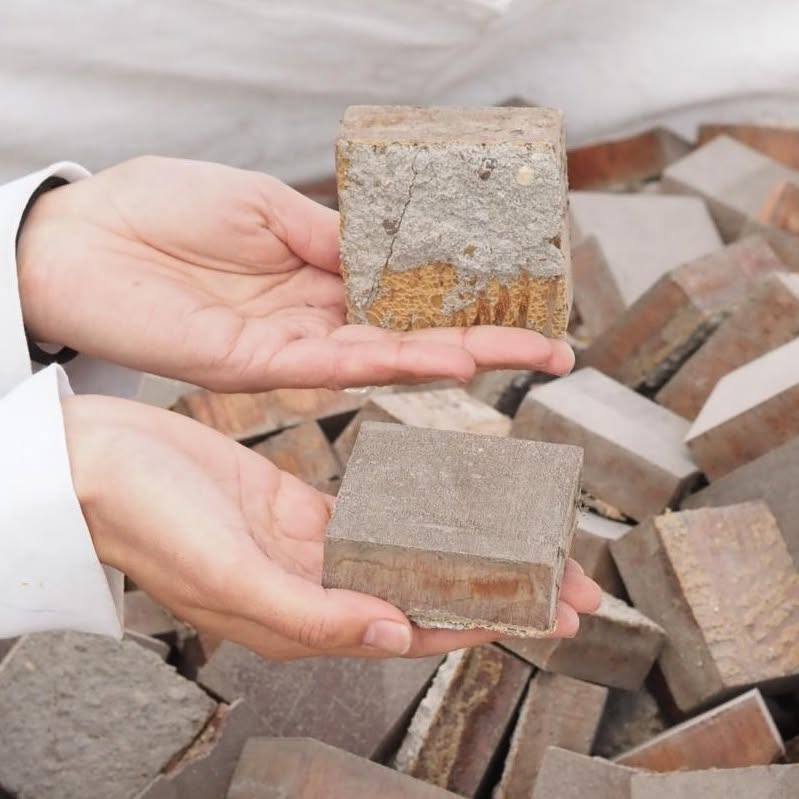
© Photo credits: Rotor Deconstruction
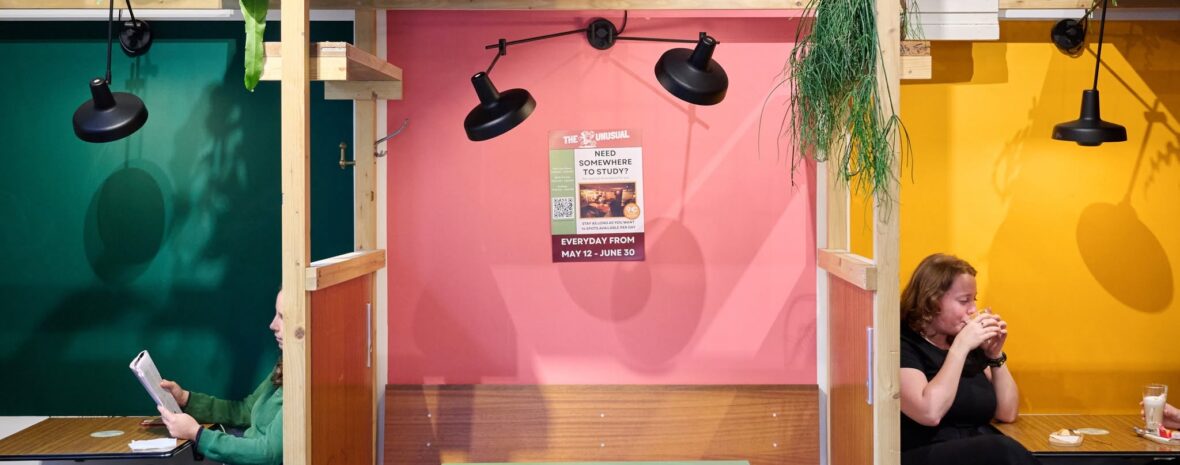
Another example: for the interior fit-out of The Unusual café, Glulam timber beams dismantled by Rotor DC were transformed by Bout2Bois – the circular carpentry workshop of Ferme Nos Pilifs – before being reused by Design With Sense. This shows that quality, creativity and reuse can be successfully combined in contemporary architectural projects.
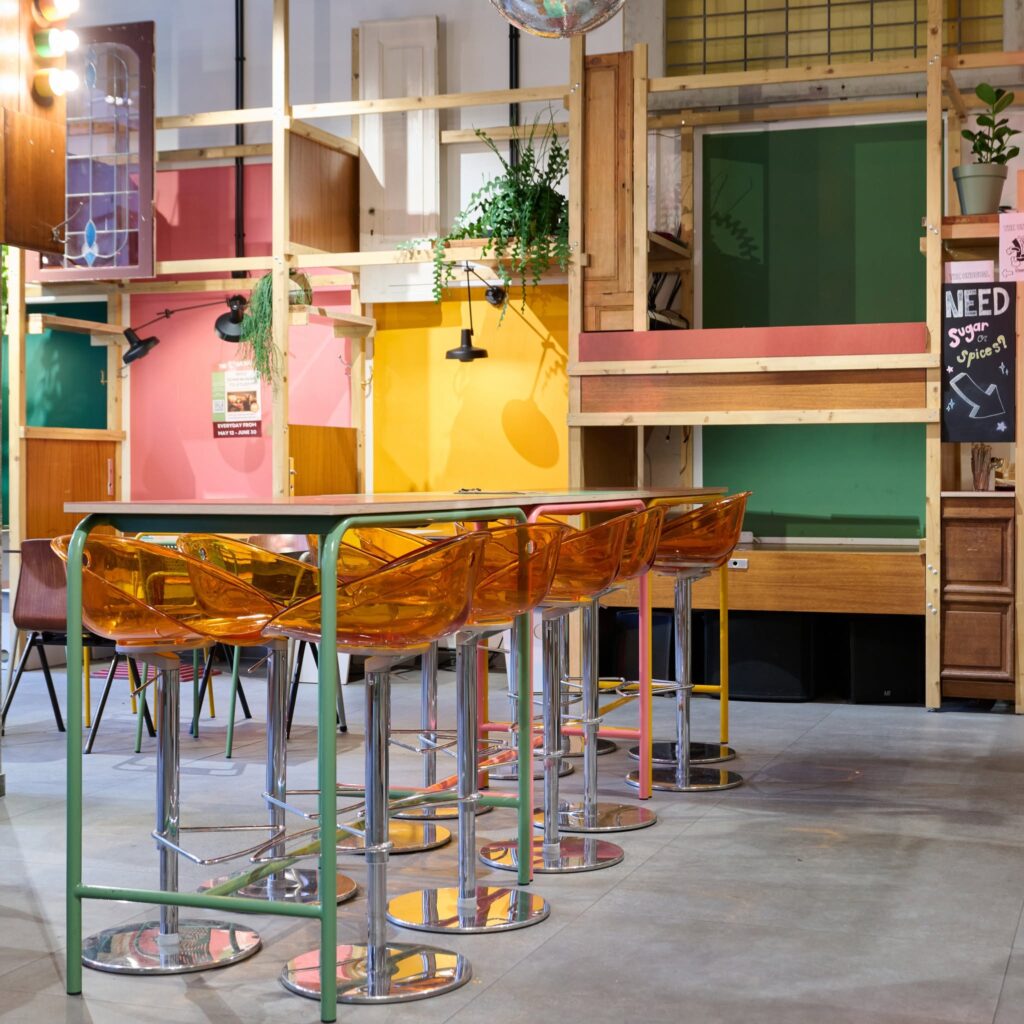
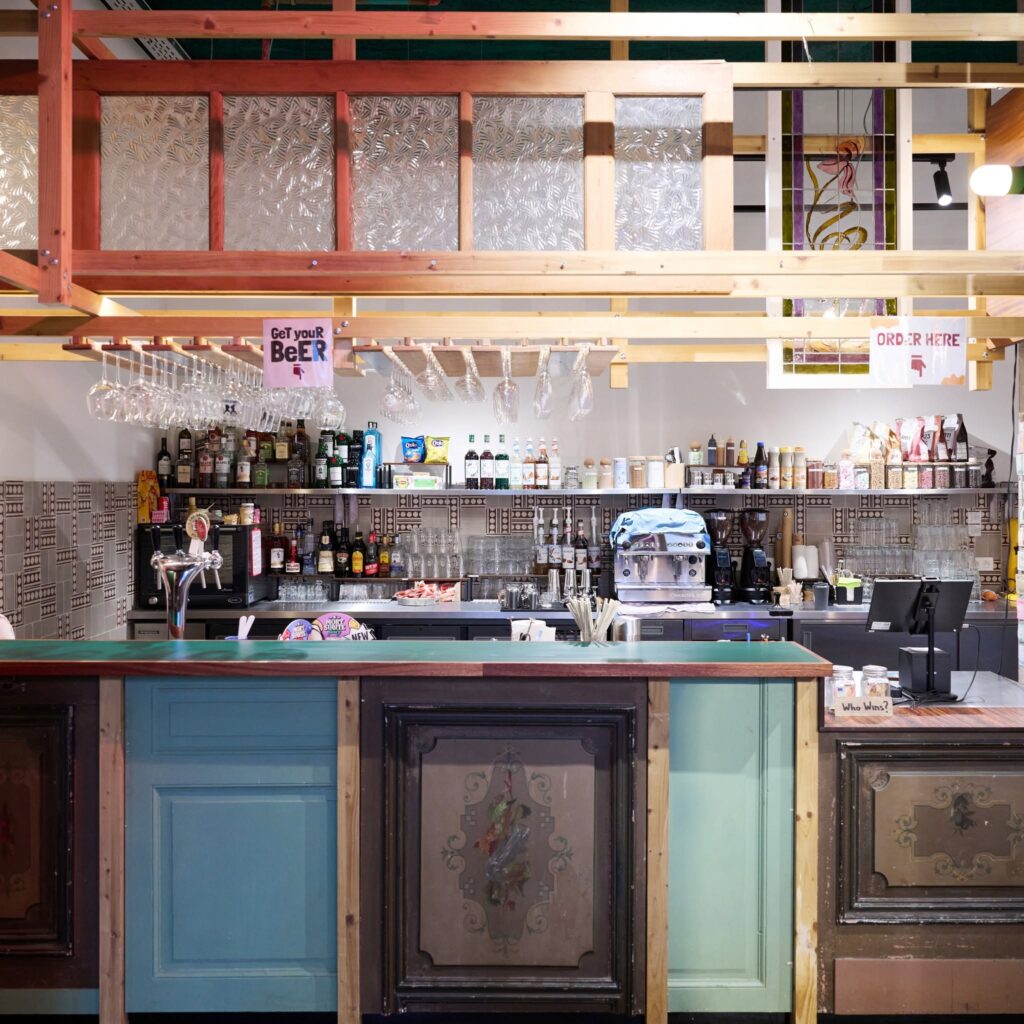
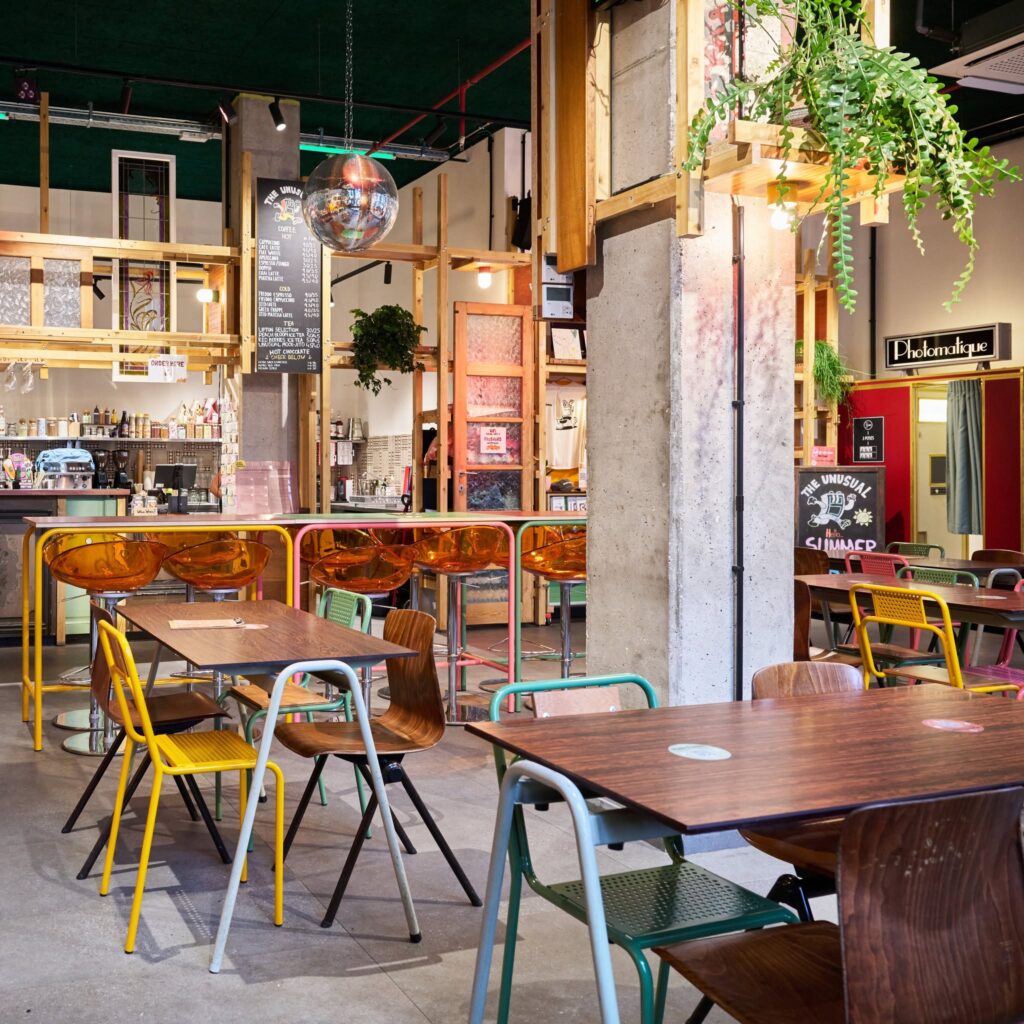
© Photo credits: Jérôme Hubert
Adapted work enterprises are now an essential link in Brussels’ material reuse sector. Thanks to the expertise they have developed in recent years, they carry out the indispensable operations that turn materials from deconstruction into resources ready to be reused locally. They are no longer simply subcontractors performing occasional tasks such as mailings, gardening or handling: they have become genuine partners in circular economy projects.
Beyond these two examples, there are many possibilities for collaboration. A company can outsource part of its production to an adapted work enterprise, develop a prototype, manufacture a small series, test a new product or temporarily set up an activity within an existing workshop. The infrastructure, equipment and professional supervision offered by adapted work enterprises provide valuable flexibility, particularly for SMEs, material manufacturers, engineering offices and young innovative companies.
Beyond technical performance, working with an adapted work enterprise also helps address increasingly important ESG challenges. Each project directly contributes to the employment of people with disabilities, for whom work is a genuine lever for autonomy, inclusion and participation in society. The often repetitive operations involved in sorting, cleaning, preparation or reconditioning are well suited to the skills and expectations of many workers in adapted work enterprises, who value the structured and reassuring framework these activities provide.
As environmental requirements become more stringent, the local reuse of materials is becoming an essential component of sustainable construction. Adapted work enterprises already have the teams, infrastructure and knowhow needed to support this transition. By working with them, companies invest in local employment rather than in the purchase of new raw materials. In doing so, they strengthen their ESG commitment while helping to develop a circular, inclusive and resilient economy, without compromising on quality.
More info: https://www.onsadapte.be/
Cathy Vaessen – Communication & Business Development Manager
FEBRAP – Brussels Federation of Adapted Work Enterprises