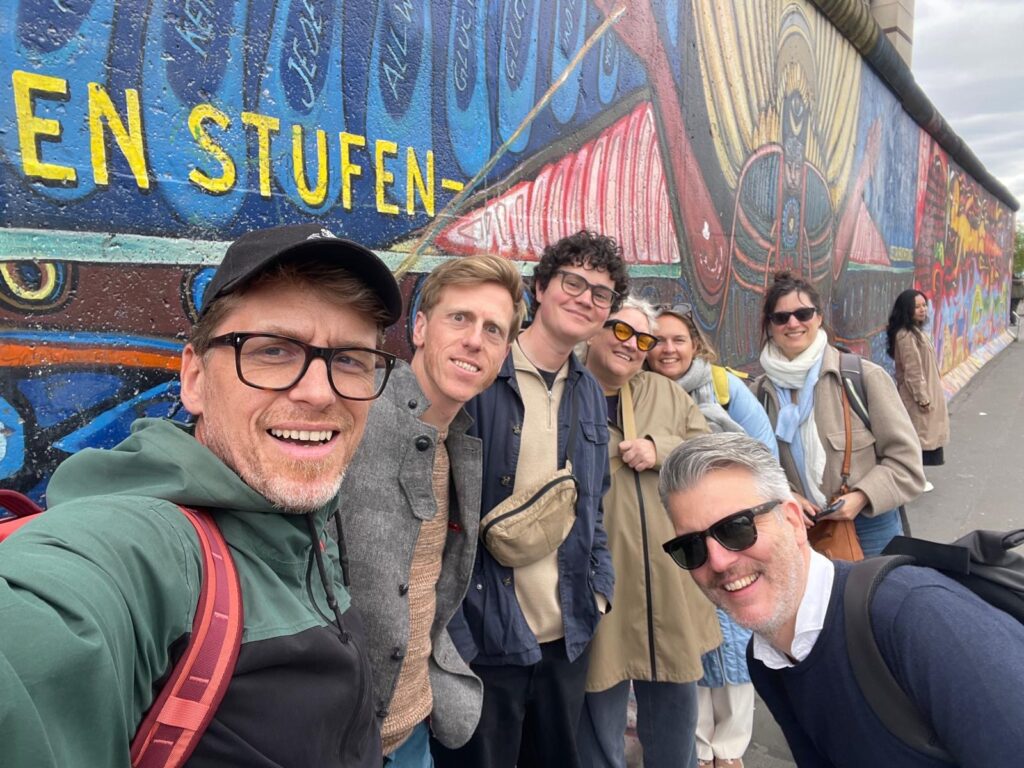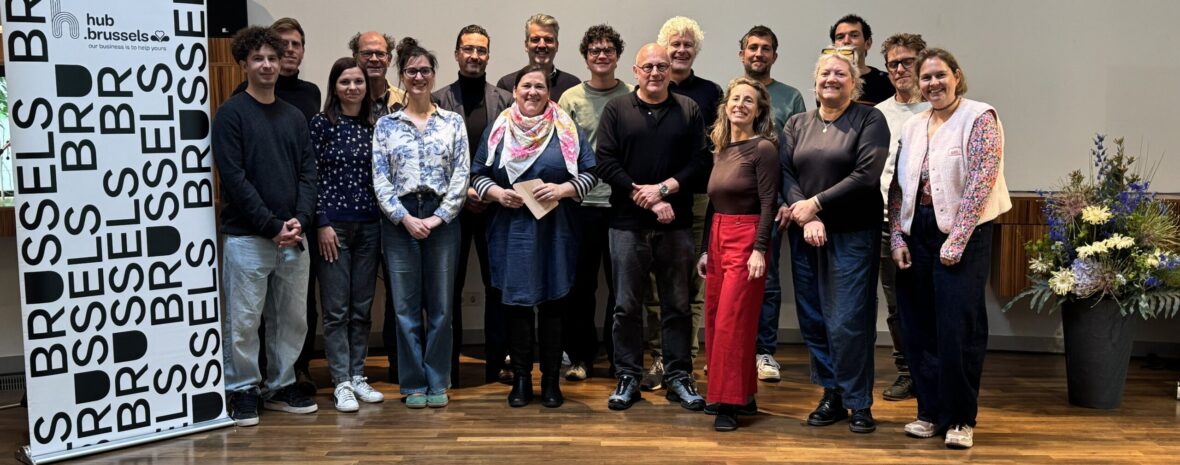
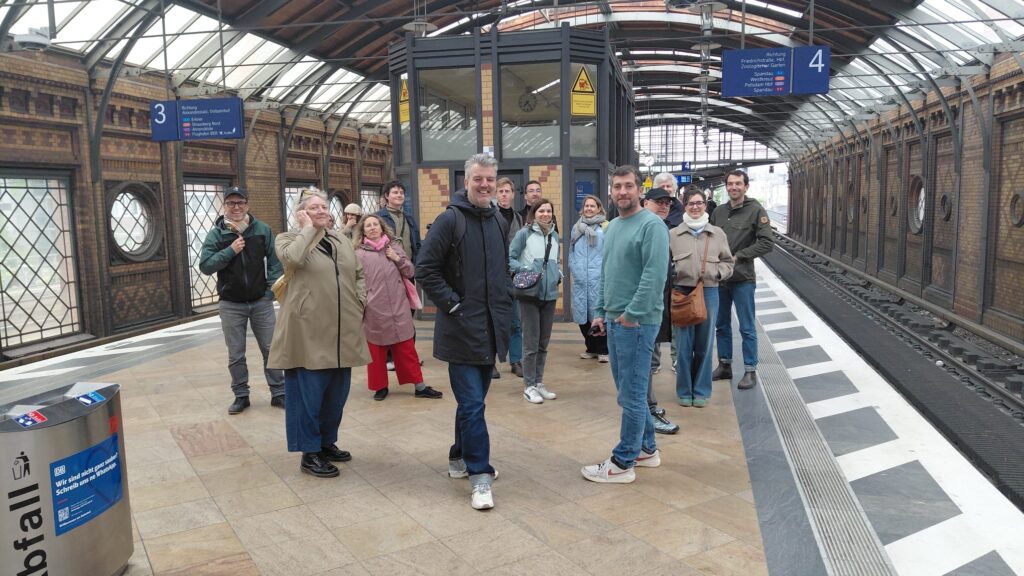
In early May, ecobuild.brussels took 14 entrepreneurs from the cluster to Berlin for a study trip focused on the levers of sustainable, circular and above all low-carbon construction. The group chose to travel by night train, a way to start networking from the journey itself while significantly reducing the environmental impact of the trip.
The aim was twofold: to feed the reflection of Brussels-based companies with concrete examples developed in Berlin, and to create a space for exchange between peers around a very clear common thread: how to reduce the carbon footprint of the built environment, from urban planning to construction choices, materials, prefabrication and reuse. The programme was structured around a series of targeted visits bringing together public actors, engineering firms, architects, researchers and companies.
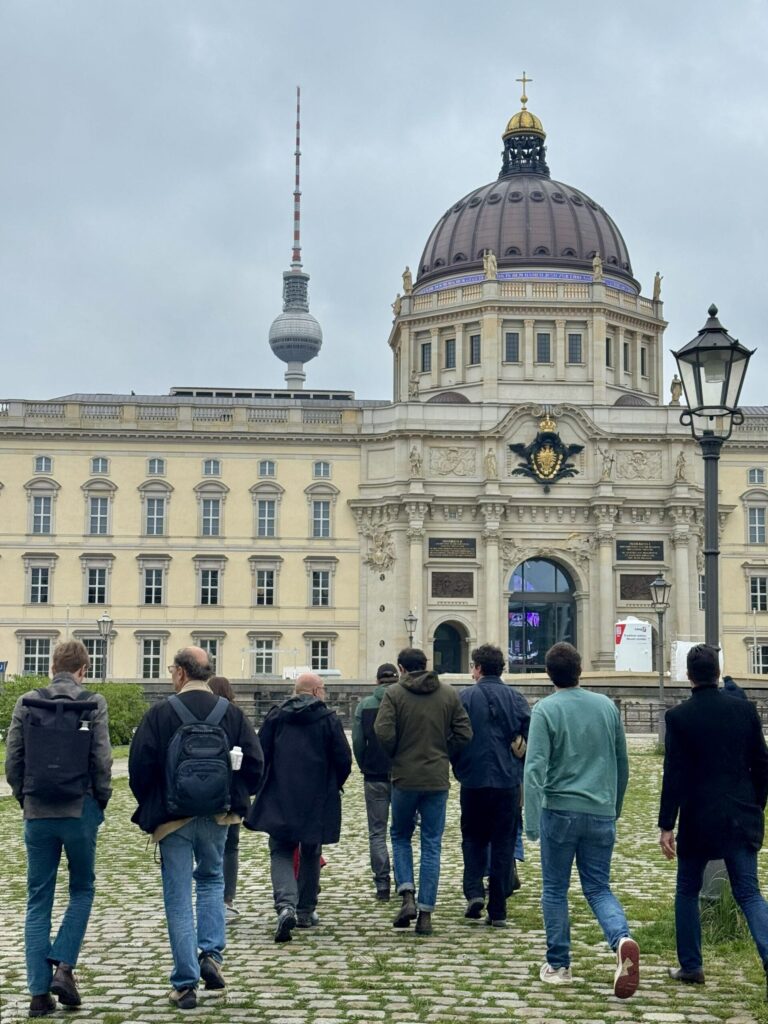
A structured programme around key transition actors
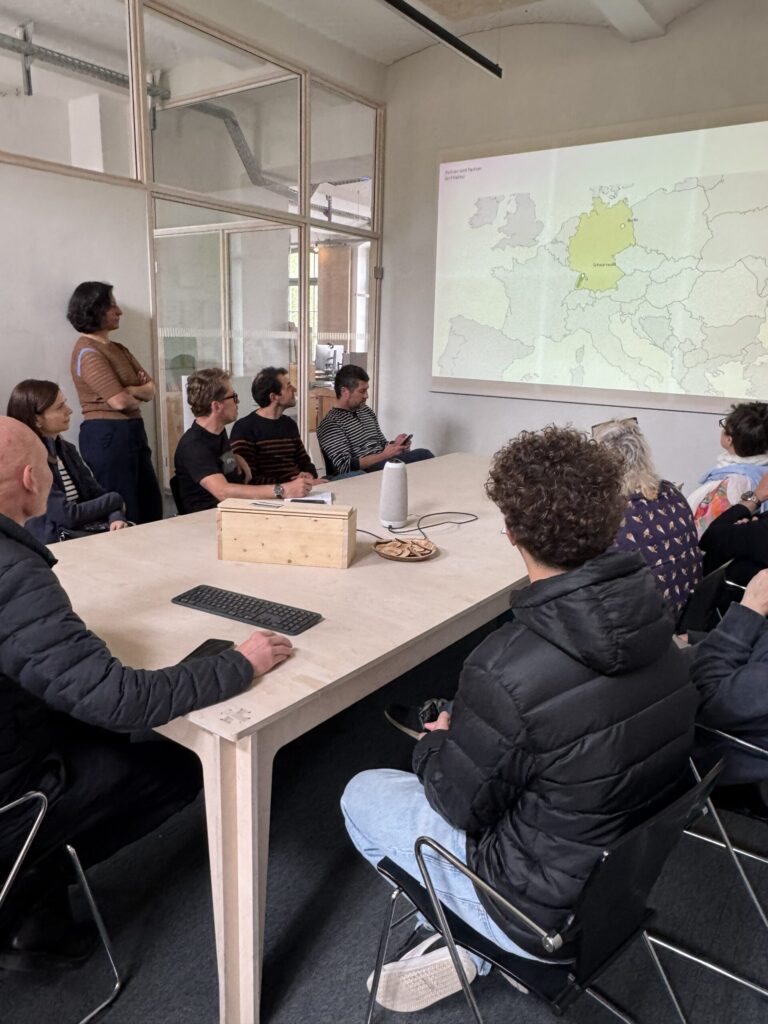
The trip began with a session at the Belgian Embassy bringing together Berlin TXL and Concular. With Gudrun Sack, participants gained a clear sense of the obstacles and trade-offs involved in transforming a former airport into a low-carbon innovation district for the future. The presentation on Berlin TXL highlighted the scale of the redevelopment of the former Tegel Airport into an area combining the Urban Tech Republic, housing, open space and strong climate ambitions, notably through the Schumacher Quartier, presented as one of the largest timber construction projects in the world. The discussions also brought to light a very current tension: in a more difficult German economic context, sustainability ambitions must contend with tighter trade-offs, including the challenge of developing a local timber value chain based on regional forest resources and existing know-how, while part of the original narrative centred on urban technologies is now evolving in a context where defence technologies are taking on greater weight.
With Concular, participants discovered, through the explanations of Dominik Campanella, a company that is structuring Germany’s material reuse market through a digital ecosystem dedicated to circularity in real estate. The presentation also helped clarify the specific features of the German reuse market and some of the differences compared with the Brussels approach. Present in several cities, the company strongly relies on the digitalisation of procedures, resource inventories, traceability, life-cycle assessment and the matching of dismantling projects with new developments. It is a highly practical approach that makes reuse more operational, more legible and more economically credible.
Applied research, timber and constructive innovation
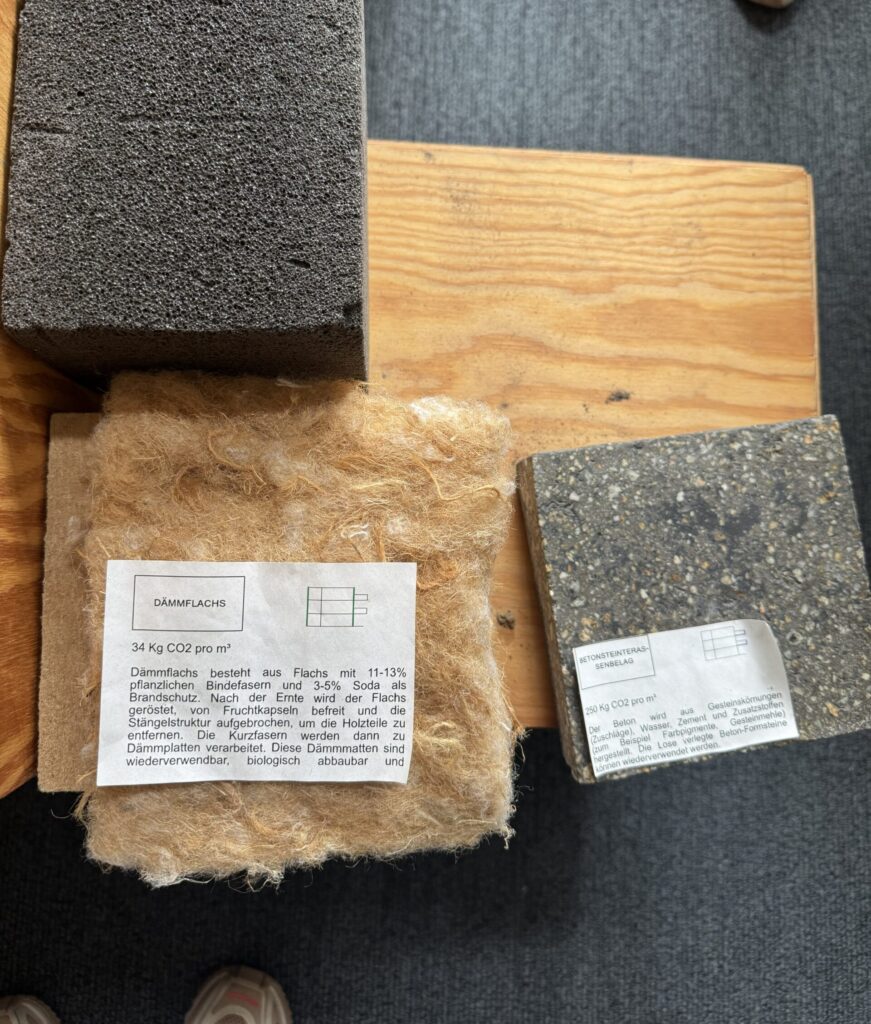
The visit to the Natural Building Lab at TU Berlin, guided by Nina Pawlicki, left a strong impression on the group. It very concretely shows how a university research lab can be directly intertwined with architecture practices and built projects, within a transdisciplinary network exploring natural materials, structural reuse and low-tech approaches that are both academic and applied. The 1:1-scale demonstrator developed within the Woodscraper project together with Partner und Partner Architektur is a powerful example of this: it enables the testing of demountable timber assemblies, reduces the need for metal connections and explores solutions genuinely oriented towards circularity.
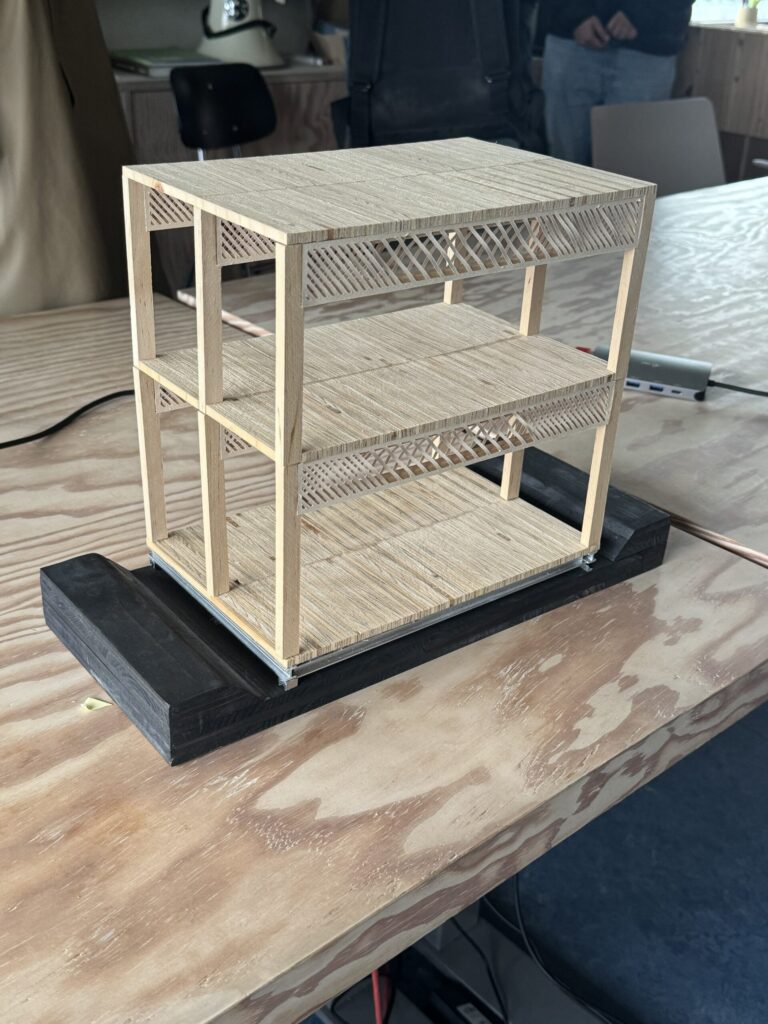
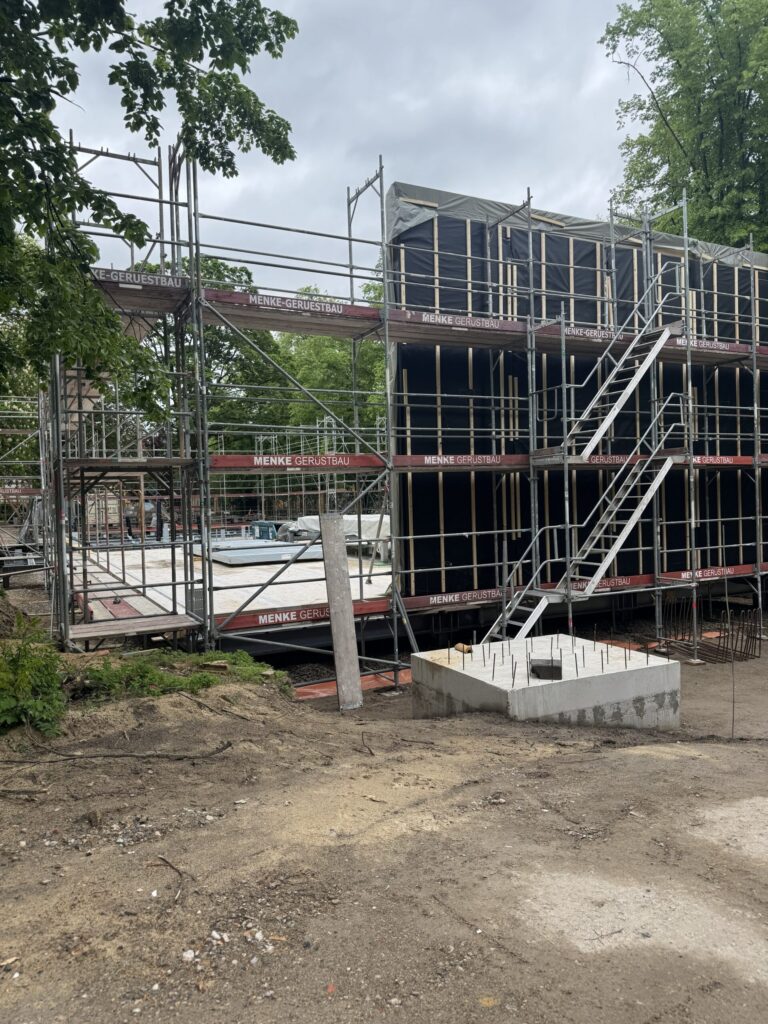
Research into reusing timber of different dimensions to create structural elements also strongly captured the group’s attention. The visit found a very concrete extension through the TULIUM and B(e) Ware projects, which illustrate how experimentation, implementation and constructive thinking can directly inform one another. The museum pavilion developed on the TU Berlin campus as a true laboratory for building within planetary boundaries shows how reused elements, bio-based materials and reversible structures can become the basis of an architecture that is both demonstrative and operational.
Sauerbruch Hutton was, in its own right, a major highlight, with the group being welcomed by Tom Geister. The practice reminded us that sustainability has been inherent to its design approach long before the term became widely used in architectural discourse. Their trajectory — turning environmental constraints into a genuine architectural identity — impressed the group: bioclimatic façades, low-tech optimisation, ingenious prefabrication and a bold use of colour at urban scale all contribute to a distinctive and highly coherent approach. The presentation of the Federal University of Applied Administrative Sciences project in Rostock was particularly inspiring and echoed several themes already encountered during the trip: prefabrication, constructive expression, climatic responsiveness, spatial quality and the search for an architecture that is both high-performing and clearly legible.
Ventilation, prefabrication and embodied architecture
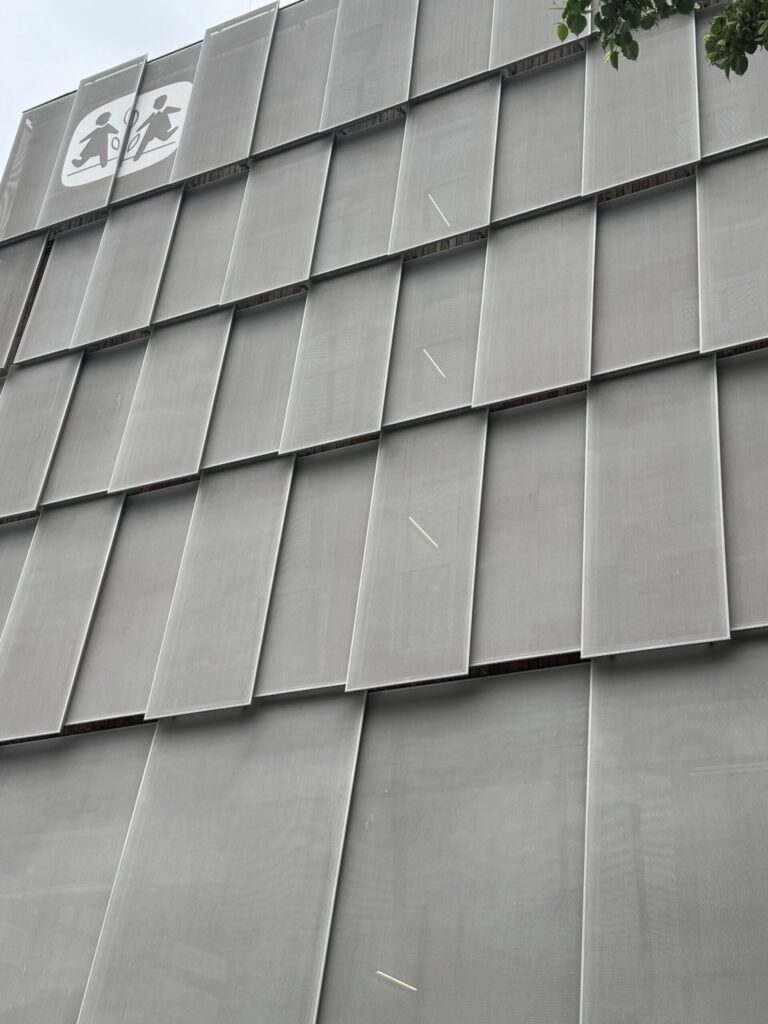
The visit to Botschaft für Kinder, designed by Ludloff Ludloff, won over the entire group. Conceived as a place for learning and community building, the project gave participants the opportunity to hear Jens Ludloff reflect on an architecture grounded in its context, attentive to use and to the integration of local timber. Beyond the project’s architectural quality, the discussions highlighted a particularly inspiring approach to natural and hybrid ventilation — a theme that gradually emerged as a real common thread throughout several visits. The project also shows how timber elements can be used ingeniously as visible, deliberate and even decorative structural components, in the service of an architecture that is at once technical, warm and memorable.
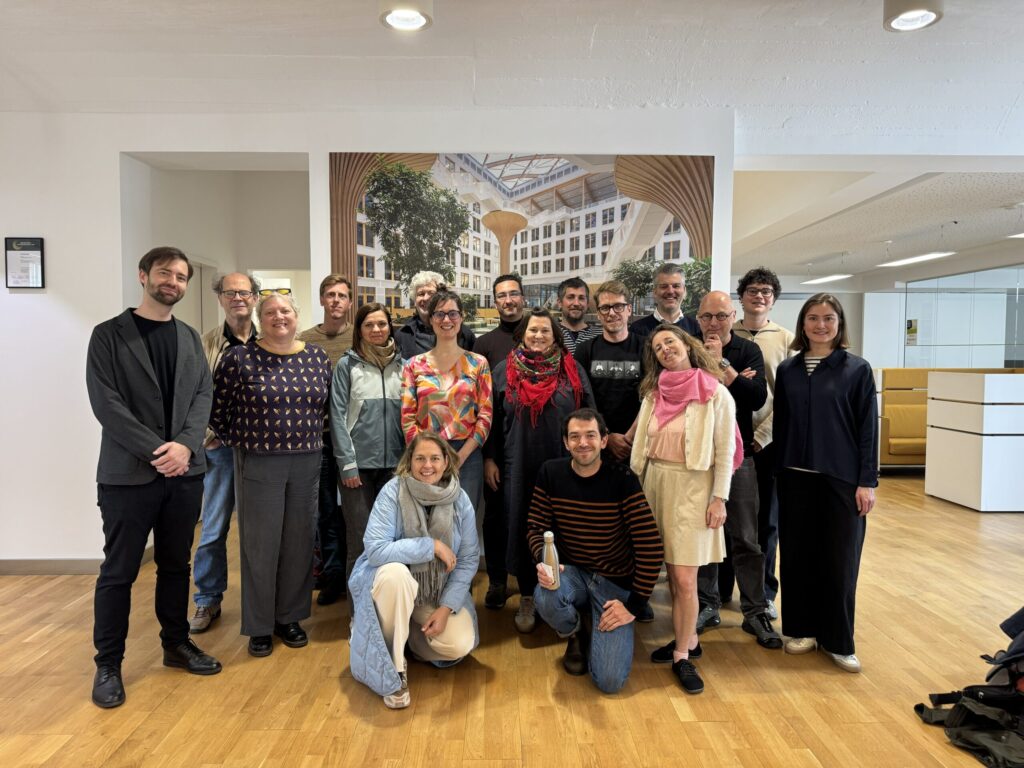
The second day began with a visit to Buro Happold, a globally renowned engineering consultancy. Inspired by their integrated approach to sustainability, the group discovered a method that embeds environmental engineering, hybrid structures, analytical tools, heat districts and low-carbon thinking from day one. The discussions, enriched by the insights of Felicitas, Peter and Markus, showed how this vision translates into large-scale projects. The intervention on heat networks drew particular interest: in a Brussels context where the decarbonisation of heating sources is a major topic, this issue opens up very concrete perspectives for transforming heating systems at urban scale.
The journey concluded at Partner und Partner Architektur, a practice born from the collaboration between a carpenter and an architect, whose identity is immediately legible in the projects presented. Their approach to timber is at once precise, sensitive and resolutely constructive: warm projects, entirely conceived in wood, with a strong sense of detail, an inherent elegance and a willingness to innovate without ever losing sight of the meaning of the project. Discovering the vision behind Woodscraper offered a very convincing illustration of this pragmatic approach to timber architecture, circularity and design for disassembly.
An inspiring, concrete and unifying format
Beyond the quality of the content, this study trip was also a strong networking moment for cluster members. The choice of the night train, the density of the programme and the diversity of the visited organisations — Berlin TXL, Concular, Natural Building Lab, Botschaft für Kinder, Sauerbruch Hutton, Buro Happold and Partner und Partner Architektur — created a setting conducive to exchange, comparison of practices and the emergence of new ideas for the Brussels context. From urban redevelopment to prefabrication, from structural reuse to heat networks, from applied research to timber architecture, each step fed a highly concrete collective reflection on decarbonisation pathways for the sector. Through this trip, ecobuild.brussels reaffirms its commitment to connecting its members with the actors who are shaping practice across Europe, whether through major urban projects, applied research, engineering, architecture or new models of circularity. A human-scale journey, yet one rich in highly concrete lessons for Brussels professionals engaged in the transition of the construction sector.
Finally, a special word of thanks to Nikola Winzler, our local attaché (berlin@hub.brussels), for his support and the quality of the exchanges throughout the trip. If Brussels-based stakeholders feel inspired by the German market and wish to explore opportunities or continue the discussions, they are warmly encouraged to get in touch!