Over the last years, Belgium’s construction market has become more and more volatile. Strained supply chains, spiralling costs due to inflation, and constant evolving of legislations are putting under pressure the built sector. As decision-makers look for ways to stay on top of these changes, and future-proof their assets, circularity can be part of the answers.
Yet, this potential remains largely underexploited. Around 95% of construction and demolition waste is technically recyclable, but the majority is still downcycled, even as material prices remain high, and access to primary resources becomes more uncertain.
Valuable materials continue to leave projects as waste, instead of being retained as assets within the construction cycle. In doing so, we pay for these materials twice: first when they are purchased, and again when they leave projects for recycling elsewhere, often without being used to their full potential locally.
The imbalance is structural. Demolition accounts for only a small share of total building activity (c.ca 8%), yet it generates the majority of construction and demolition waste (between 55%-70%).
Addressing this mismatch requires more than isolated sustainability measures or pilot projects. It demands a shift in how materials are identified, managed, and valued across the entire lifecycle of buildings.
This is where urban mining becomes a strategic lever. By treating the existing buildings as material mines, urban mining enables the recovery and reintegration of materials that would otherwise be lost.
In cities with many older buildings, Brussels for starters, this approach treats them as a valuable reserve of materials, that can be recovered and reused.
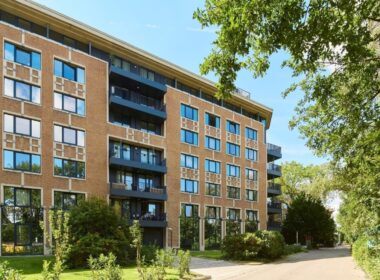
Successful projects, such as ZIN in Brussels, illustrate how this shift can be implemented at project scale. In this project, material reuse strategies were embedded early in the design process, while making sure new concrete introduced on site was Cradle to Cradle certified. At every stage, the project was designed to make future material recovery possible.
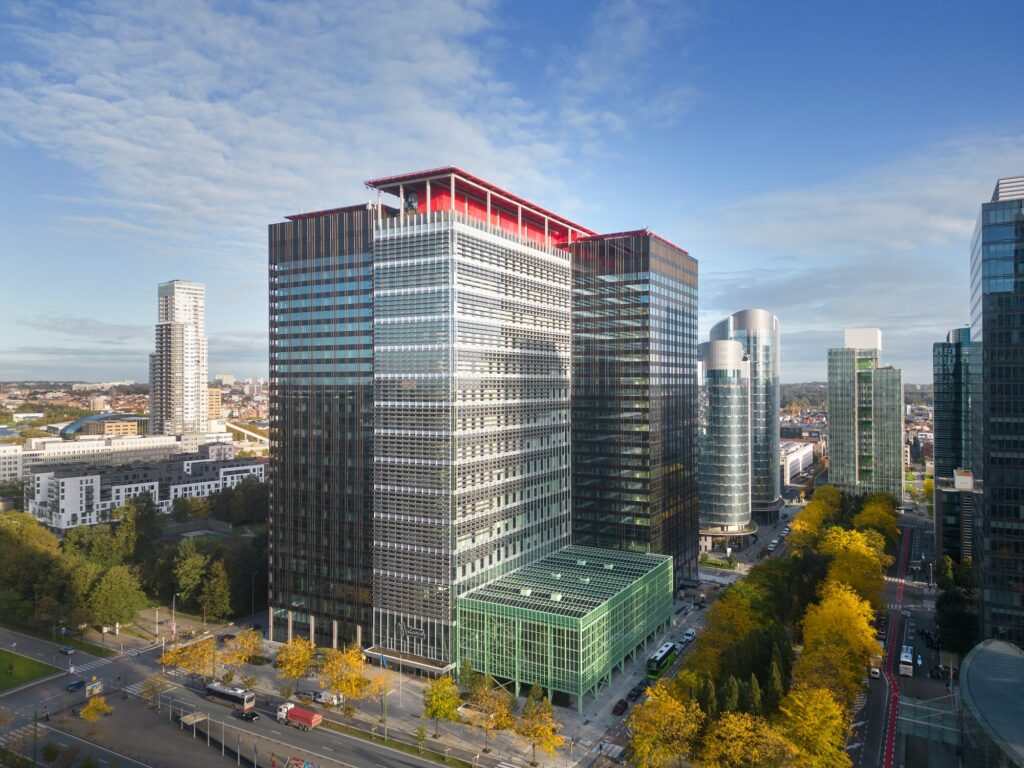
Urban Mining brings true value when applied thoughtfully early in the project lifecycle. Decisions taken at concept and design stages help determine whether materials can be recovered at scale or are ultimately lost.
Material inventories are therefore moving their focus towards elements with the largest volumes and environmental footprint, and where early design choices have the greatest impact — such as concrete structures, masonry, and steel.
This shift changes who is involved and when. Contractors and manufacturers are brought in earlier, allowing market needs, technical constraints, and logistics to be considered from the start.
As a result, material reuse becomes a coordinated effort across the project, rather than a series of isolated decisions. New actors also enter the supply chain, such as specialized manufacturers who can handle large material volumes and prepare them for high-quality refurbishment, reuse, or upcycling.
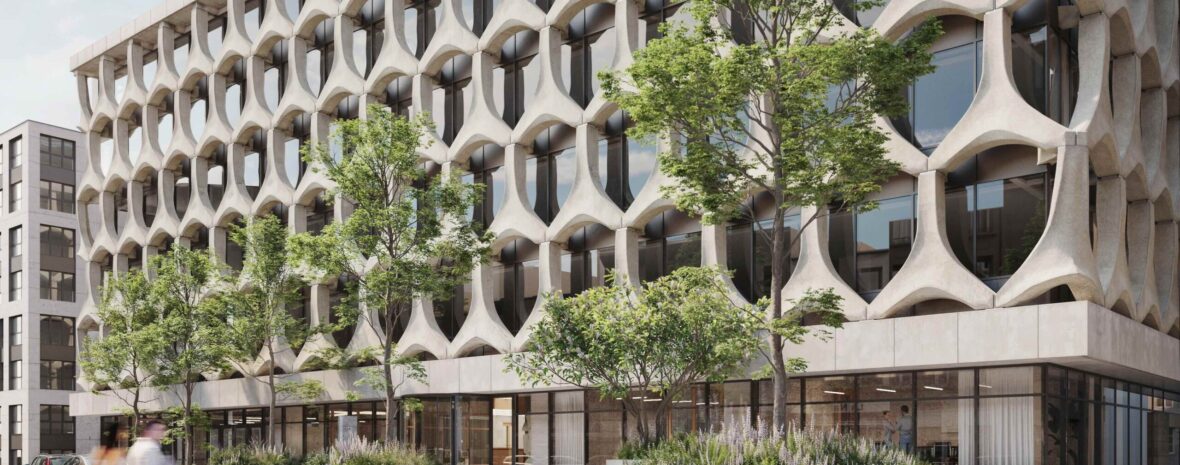
Preserving material quality is critical for a truly circular construction. Concrete re-use provides a clear example of this principle in practice: instead of being downcycled for low-grade applications such as road sub-base, it can be upcycled for new structural uses, capturing its value. Given the volumes of concrete embedded in Belgian buildings and the high CO₂ footprint of its production, this represents a great opportunity to reduce environmental impact.
Urban mining goes beyond sustainability, creating tangible economic opportunities. By keeping materials in circulation, it supports local industries and generates employment. It also boosts the application of Cradle-to-Cradle (C2C) principles, but preventing materials from being conceived as waste by design at the end of their life cycle.
Designing buildings with future re-use in mind eases this process, material and product selection can support this objective through the integration of C2C products that are designed for reuse, repurposing, or recycling.
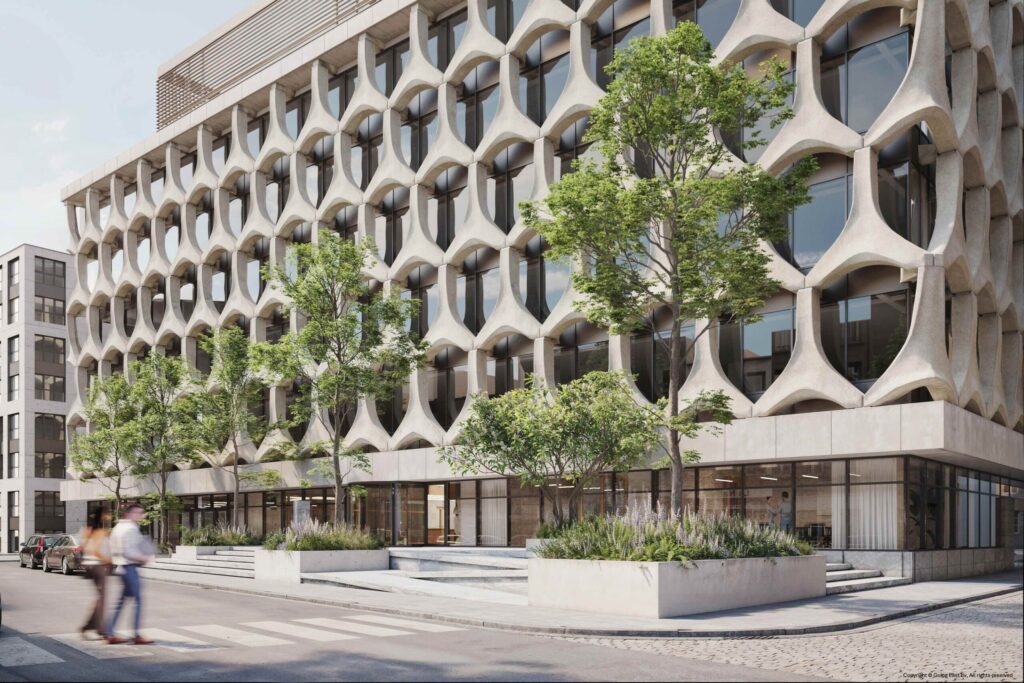
Projects such as ZIN, or The Hive, where a high rate of material is being reused on-site or off-site, demonstrate the potential of urban mining and material re-use when stakeholders commit to ambitious circular objectives. To fully realize this potential, re-use scenarios and on- or off-site partnerships must be identified at an early stage of the project.
True circularity happens when the entire construction chain works together to turn materials into lasting value.