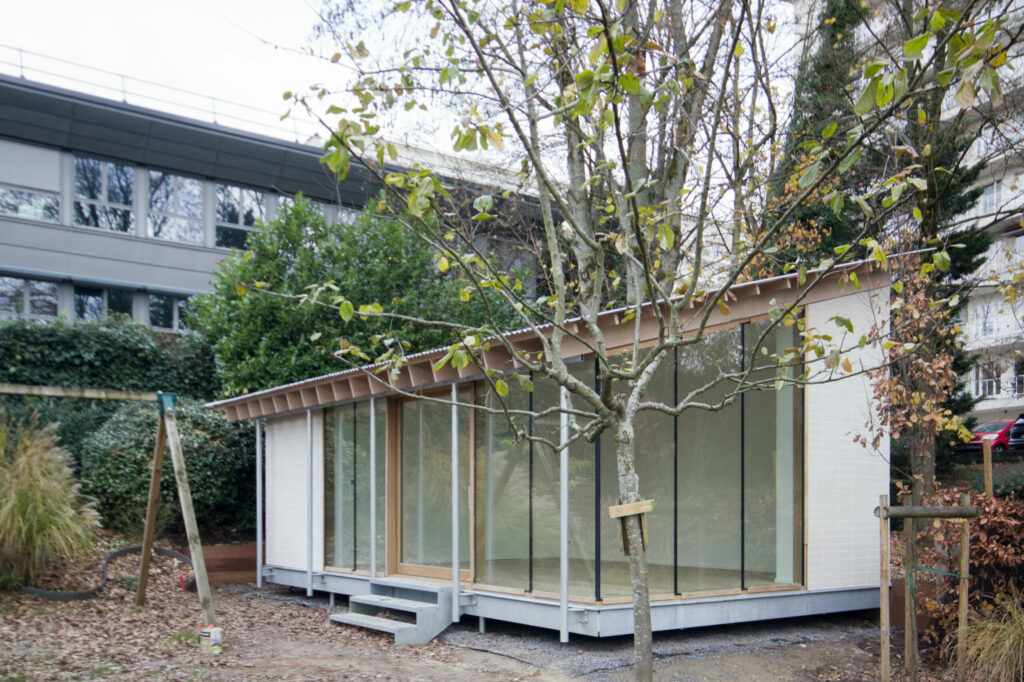
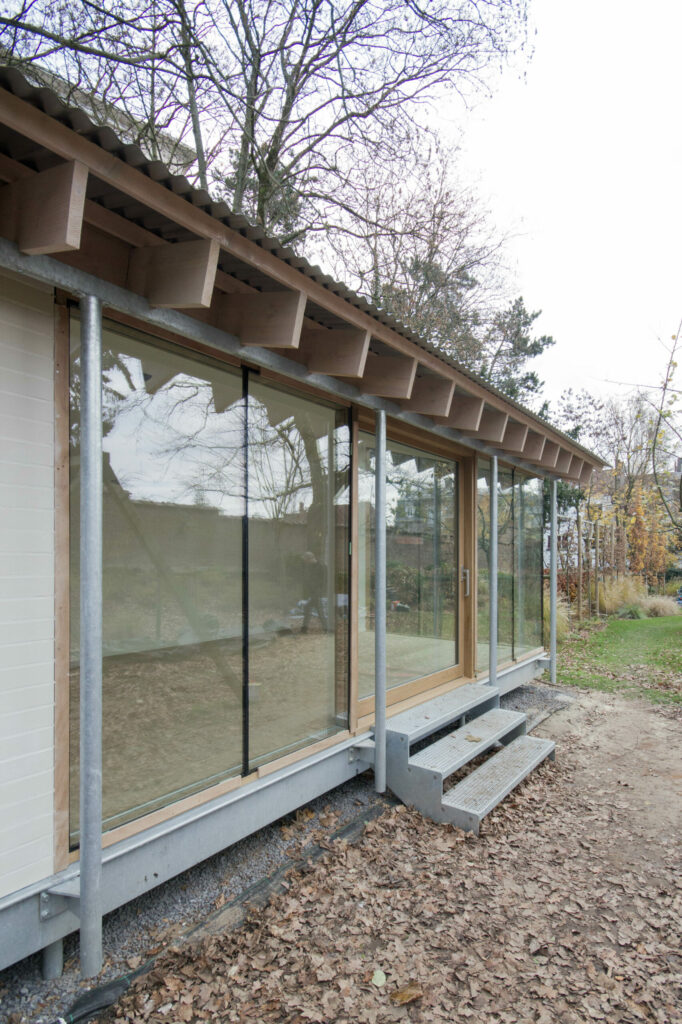
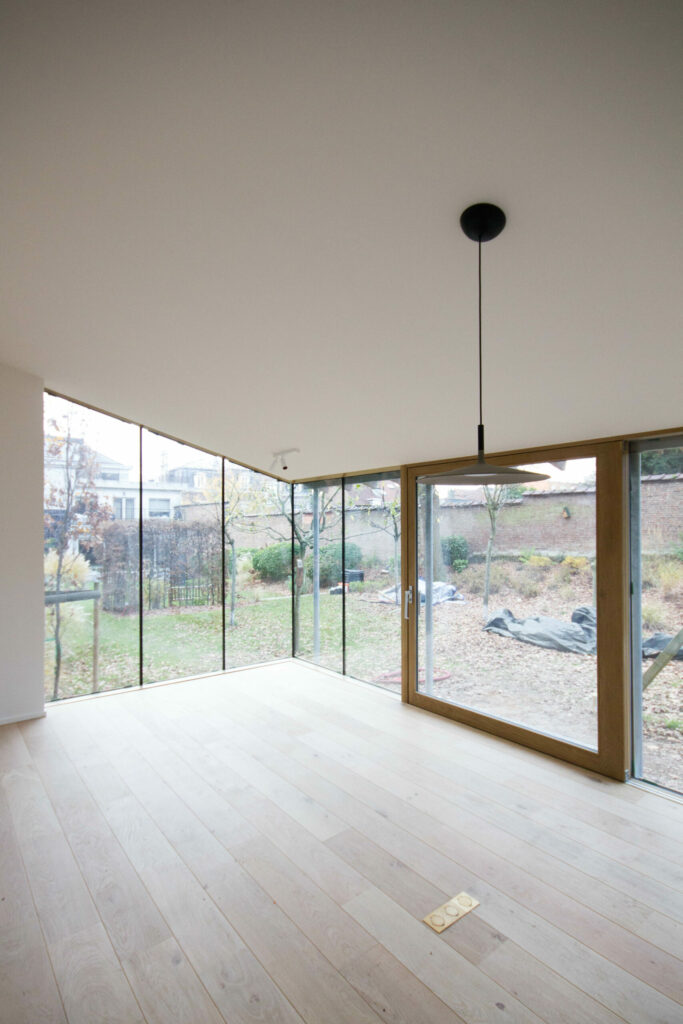
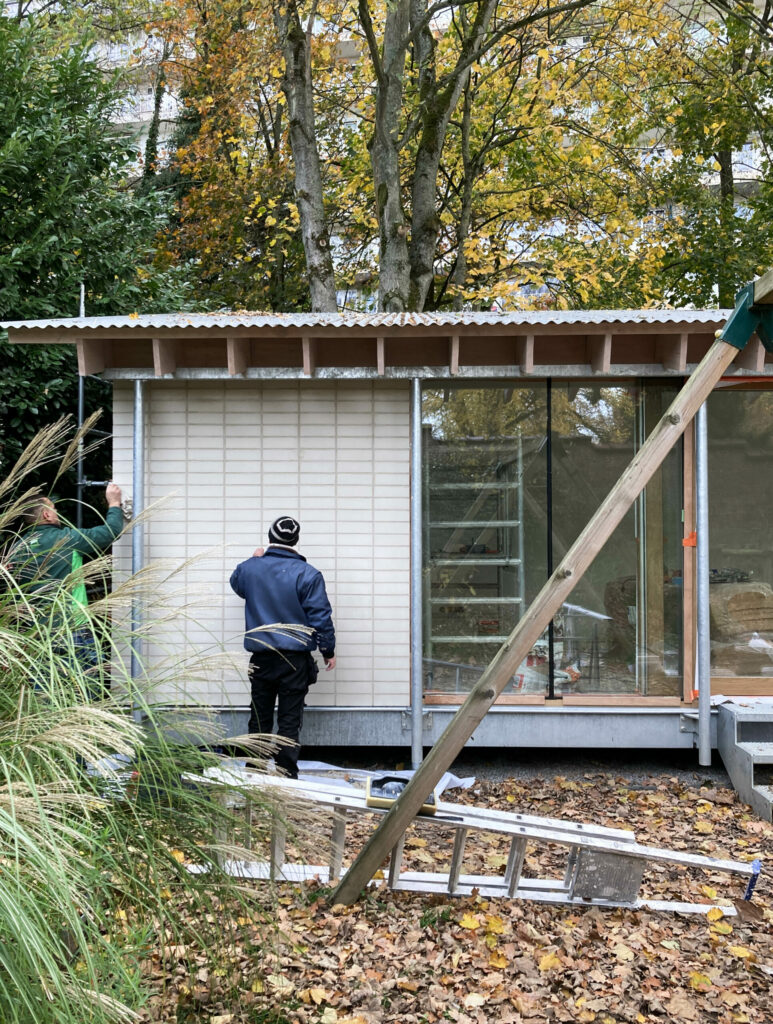
This project is in response to the owners’ desire to supplement their apartment with a dedicated remote working space at the bottom of their garden. The pavilion, with a surface area of around 30 m², has been designed to meet a number of urban and environmental challenges:
- Controlled volume: the project focused on an understated shape and unobtrusive location to reduce the visual impact on surrounding buildings.
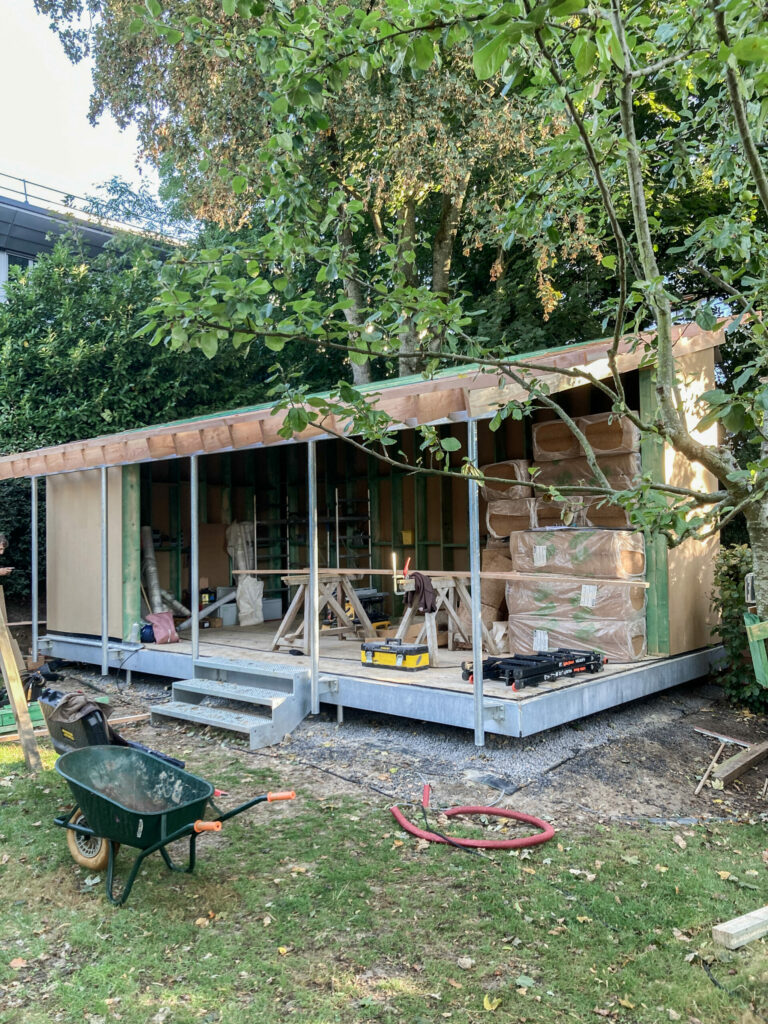
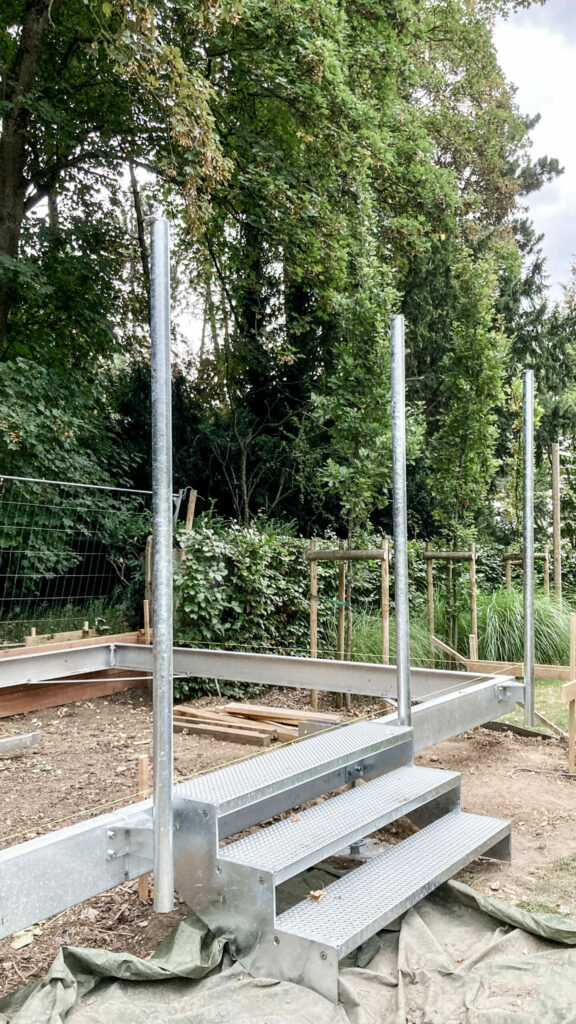
- Low-disturbance site: the steel structure and timber framing were prefabricated in the workshop, reducing the time needed on site and the disruption caused.
- Respect for the ecosystem: instead of being fixed to the ground, the structure rests solely on four foundation posts, minimising the impact on the existing garden.
- Energy performance: the building envelope (floor, facades, roof) is highly insulated and airtight. Combined with solar energy inputs, this makes heating requirements almost negligible.
- Choice of responsible materials: materials were selected according to a number of criteria: organically or geo-sourced materials, geographical proximity, thermal inertia capacity, etc.
Non-exhaustive list of materials used:
- Wood structure (exposed Douglas fir framework);
- Oak frame;
- Grass fibre floor insulation;
- Wood fibre insulation for facades, roofs and interior linings;
- Exterior lime rendering (on the party walls and at the back of the plot);
- Fermacell finishing boards;
- Solid oak flooring;
- Woodwork finishings (framework, parquet): natural oils.
This project was carried out in collaboration with CARPENTARI, a member of the Ecobuild cluster, for the structural work package.
Note: The facades are not yet completely finished; external metal covers still need to be fitted around the perimeter of the glazed complex.