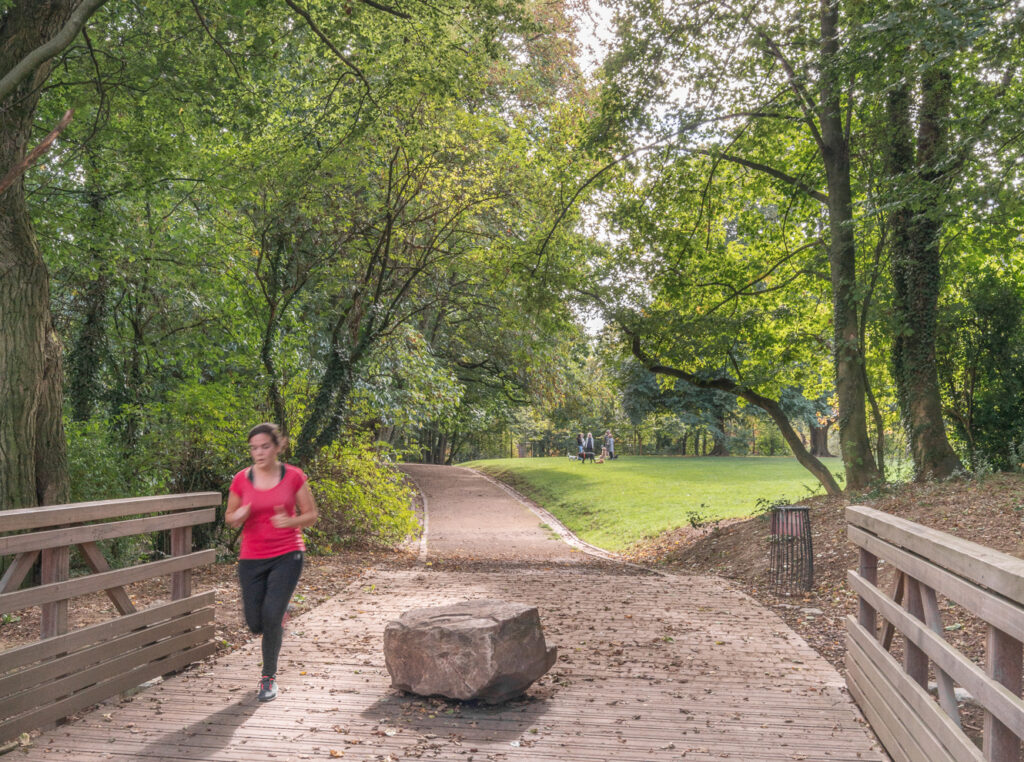
Renovation of Astrid Park in Anderlecht and creation of a playground
The renovation of Astrid Park is the continuation of phased studies and projects carried out by the SKOPE – D+A INTERNATIONAL team. The major challenge is to restore this 9-hectare park to a place suited to its occupants, secure the site and promote diverse recreational activities.
The urban planning and landscaping are designed to create fluid links and continuity between spaces. The aim is to make entrances clearer and mark out the access points, so they can be incorporated into the regional green network. The two main routes lead to the Neerpede green zone park and the Pede valley.
The project is part of a global vision, both in terms of installing new features and encouraging communication. Citizen participation is at the heart of our thinking and the harmonious nature of these welcoming spaces – a socio-cultural link – which will sustain the development of the neighbourhood over the long term.
Visual openings
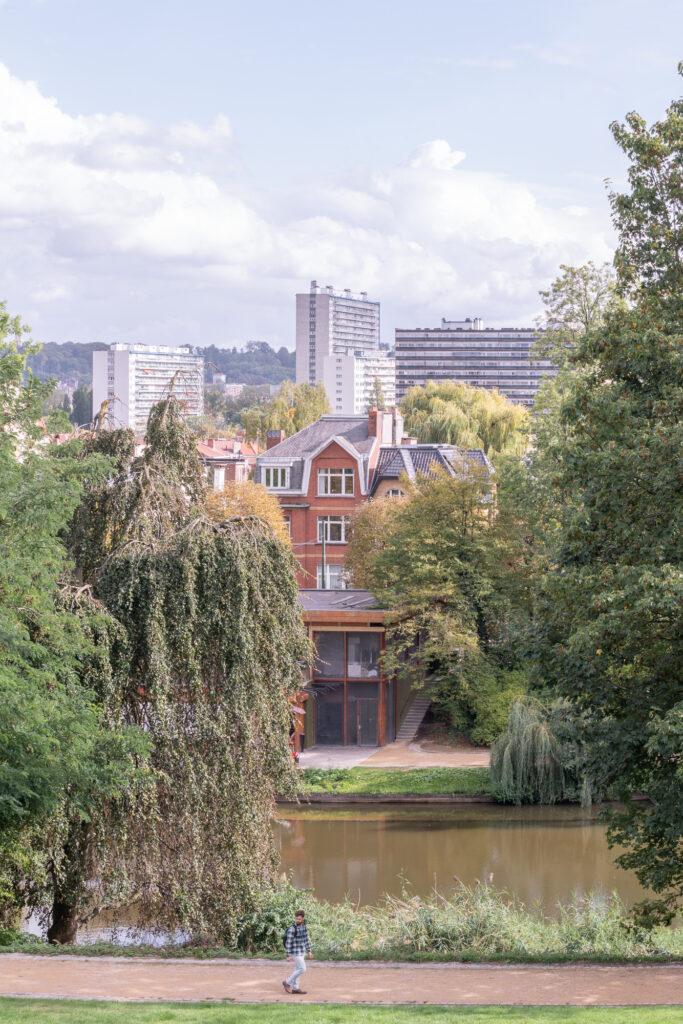
In keeping with the park’s historic composition, visual sightlines are cleared, providing long-distance views over the Brussels landscape and visual corridors from access points and the adjacent walls.
Vegetation layers
The renovation of the heart of the park is accompanied by a medium- to long-term restructuring of the layers of vegetation through selective thinning and the creation of clearings/borders. Stratified replanting in corridors (links) will promote biodiversity and the evolutionary nature of micro-ecosystems.
Water management
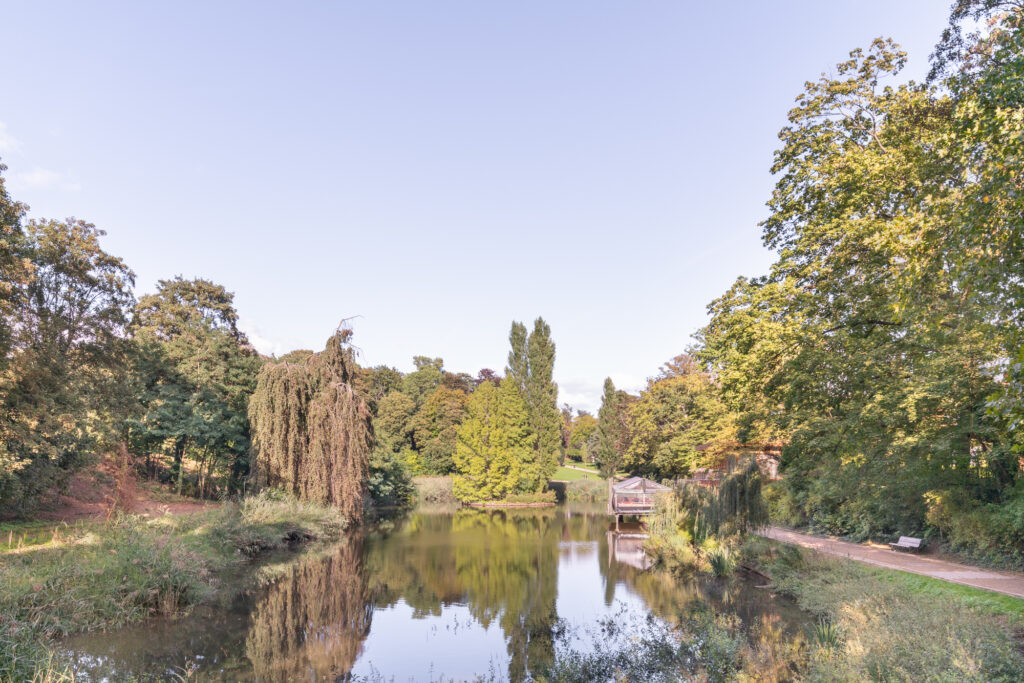
The project will bring out the value of the wooded embankment, the various water levels on the banks of the pond (reed beds, hygrophytes, alder/willow groves) and the Arboretum. As the water feature is being brought back into view, a sludge analysis is being carried out. To guarantee the supply of water, a rainwater recovery system is being installed throughout the park. There are plans to construct infiltration channels around paved surfaces.
Use of natural materials
With a view to sustainable development and differentiated management, some logs are being kept on site for use as seats in wooded areas (paths and meditation), shavings (RCW) are used to cover forest paths, and natural deterrent boundaries mark out the areas to be protected from trampling. The project uses natural materials (plant resin, wood, stone). Strategically placed educational panels illustrate the evolution of the picturesque views.
Editor: Gilles Saussez
Photo: Cinzia Romanin