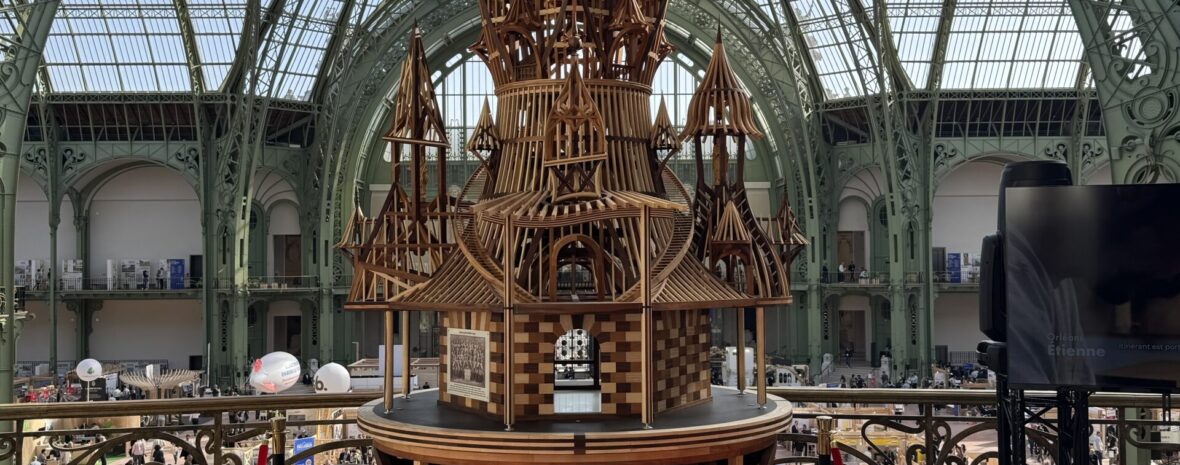
On Thursday 26 February 2026, ecobuild.brussels took part in the Forum Bois Construction in Paris, a key meeting point for European players in timber and bio‑based construction. During a dense but particularly stimulating day, we shared a common conviction with all actors in the sector: wood is no longer an alternative solution, but an asset for structuring the low‑carbon transition of the construction sector.
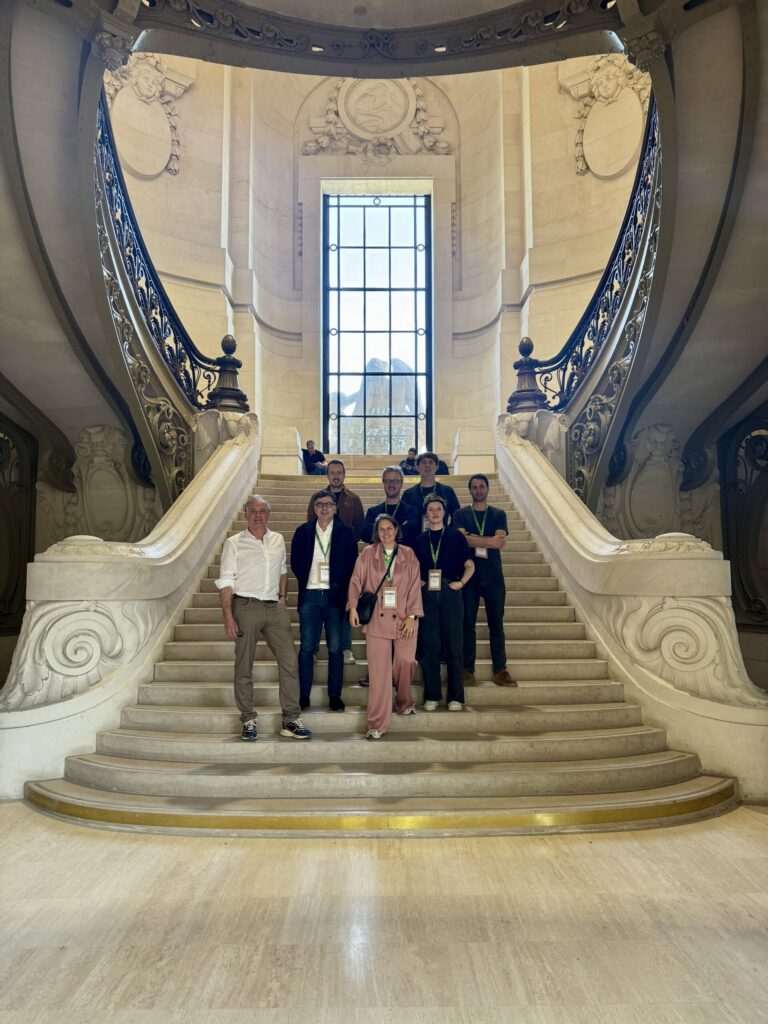
AUXAU Architecture, MDW Architecture, Atelier d’Architecture Galand, Sweco Engineers and Spidec, all members of the cluster, accompanied us on this visit with the objective of confronting Brussels practices with European dynamics, and returning with lessons directly applicable to projects in Brussels.
A Forum marked by rising complexity… and maturity
What stands out, edition after edition, is the technical and cultural rise of timber construction. Forum 2026 showcased complex, large‑scale projects, sometimes radically hybrid, always increasingly demanding.
Building high in wood: a topic that is now operational
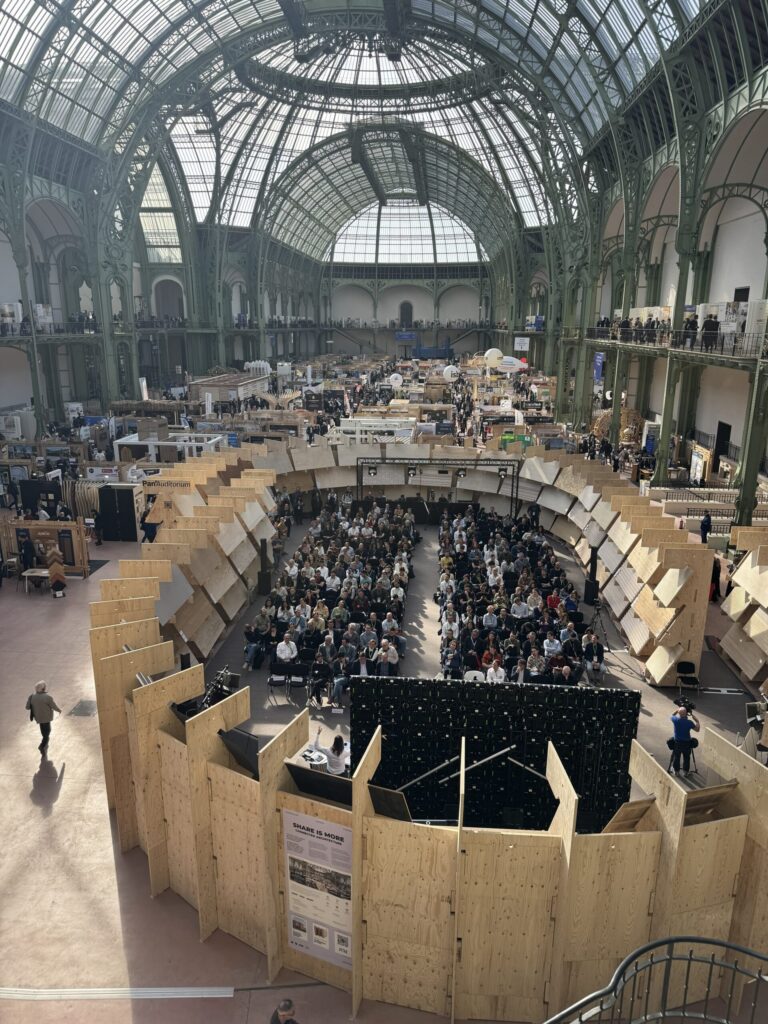
The workshop dedicated to tall timber buildings confirmed a strong trend:
the question is no longer “can we build high in wood?” but “how can we do it in a safe, reproducible and relevant way?”
Several European feedbacks demonstrate:
- A systemic integration of sprinkler systems, now perceived as an accelerator rather than a constraint;
- Strengthened coordination between architecture, structure and fire safety from the outset;
- A deliberate approach to height as a lever for land‑use efficiency.
A clear signal for Brussels, where density and verticality have become central urban challenges.
Acoustics, carbon and materiality: the return of “the right material in the right place”
Another key takeaway: the growing sophistication of mixed construction systems.
The workshop dedicated to low‑carbon acoustics highlighted a genuine paradigm shift: rather than seeking performance equivalent to conventional systems, teams are developing tailor‑made solutions, combining wood, plant fibres, raw earth or optimised cassettes.
The lessons are clear:
- Timber floors now achieve competitive acoustic performance levels;
- The key lies in fine‑tuned dimensioning and integrated engineering;
- Hybrid systems are becoming the norm, not the exception.
When climate adaptation becomes an architectural project
A particularly inspiring workshop focused on new low‑carbon aesthetics resulting from climate adaptation. Here, the discussion moves away from quantified performance to address an essential question: what does adapted and resource‑efficient architecture look like?
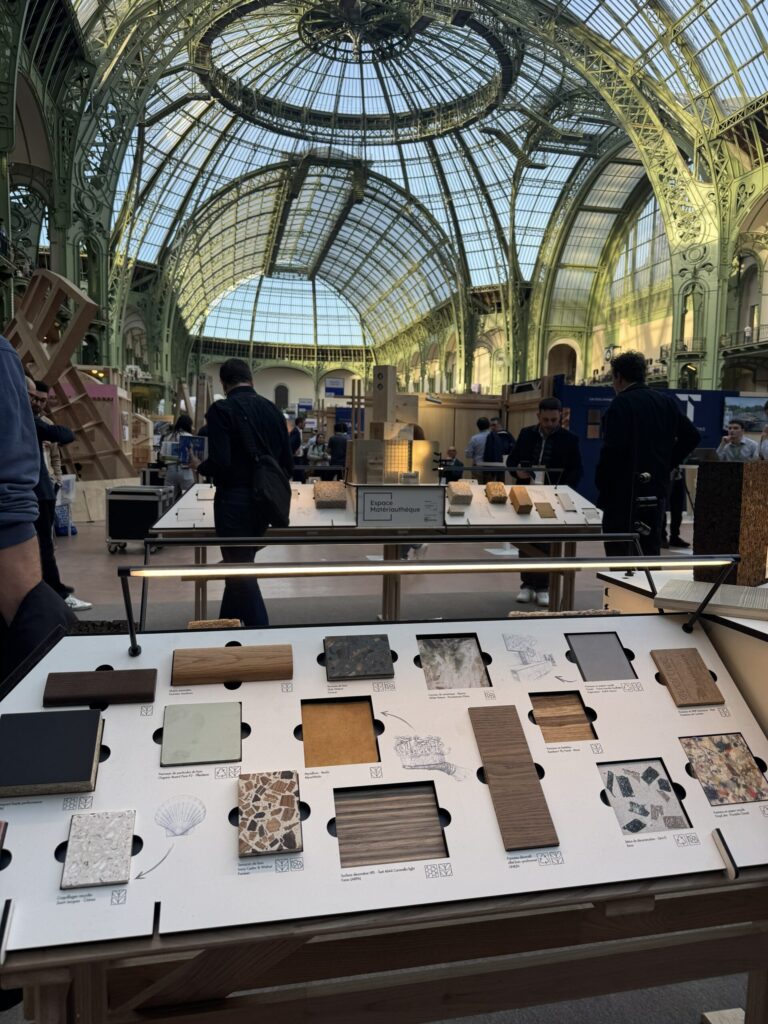
The projects presented embrace:
- A patina of time integrated as a design intention.
- Breathing façades, less smooth and more expressive;
- Raw materials, often local and sometimes imperfect;
Wood, combined with earth or stone, thus becomes a fully‑fledged architectural language.
Reuse and re‑use: moving out of the prototype, entering the system
Two workshops were dedicated to wood reuse and the re‑use of existing structures.
The discourse has become more pragmatic: there is no longer talk of intention, but of operational implementation.
What we take away:
- Structural reuse is technically possible, including for load‑bearing elements;
- Its economic viability depends on anticipation from the design stage;
- The barriers remain well known: traceability, insurance, regulatory frameworks;
- The key tools are now identified: upstream inventories, intermediary platforms, adapted engineering.
A clear field of opportunities for Brussels actors involved in selective deconstruction, circular design and low‑carbon engineering.
Project gallery: a Europe of wood in motion
The project gallery, always impressive, confirmed several underlying trends:
- Advanced prefabrication as a standard of quality and construction‑site control;
- Ambitious public projects (schools, sports facilities, administrative buildings) playing a driving role;
- Wood as a strong narrative medium, carrying identity and meaning for users.
Public project owners are increasingly embracing their role as accelerators of the transition, which constitutes an encouraging signal.
Cross‑perspectives with Brussels actors
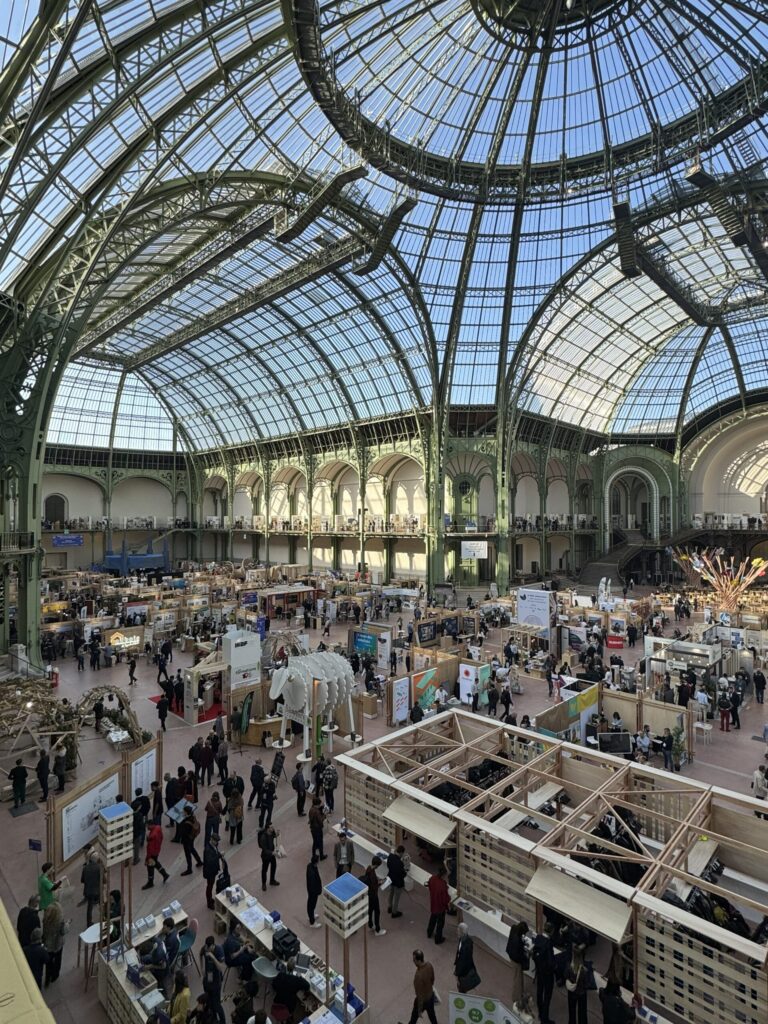
Our exchanges with Primaarchitecture, ArtBuild and Cambium, also present at the Forum, confirmed a shared perception:
- The perception of a Brussels ecosystem that is agile, innovative, but still too fragmented.
- The desire to push the complexity of timber projects further;
- A need for regulatory stability and economic recognition of carbon performance;
Wood, a strategic opportunity for Brussels
Forum Bois Construction 2026 clearly shows it: wood is a real opportunity for the low‑carbon transition in Brussels.
It calls for a different way of designing, building and reusing, adapted to urban constraints and the environmental ambitions of the Region.
For ecobuild.brussels, the conclusion is simple: “When technical solutions are there and actors are ready: wood becomes an obvious choice.”
The transition is happening now.
Project by project.