Energy transition, hot water production and heating: between constraints and technological developments

From the gas-oil duel to technological inflation.
Until the mid-2010s, there was little debate about heating. For a builder or designer, the choice often came down to a duel between a natural gas- or oil-fired boiler, with gas generally winning out when it was available. The authorities didn’t encourage the use of heating with electricity, except in the case of our French neighbours with their nuclear power plants.
The main technological breakthrough of the last twenty years was the switch to condensing boilers, which made it possible to gain a few extra percent in efficiency, although they still had to be able to condense with low-temperature returns.
Today, everything has changed, and heating with electricity is no longer discouraged – on the contrary, it is advised. Whether it’s buying a car or heating a building, the pressure to reduce carbon is being felt at every level: regulatory, economic and societal. In terms of heating, this means the arrival of a range of new and old technologies on the scene, each with its own strengths and weaknesses. All of which makes for some seriously complex thinking.
Heat pumps: the star of the moment
In recent passive or low-energy buildings, the integration of a heat pump has been relatively straightforward for some years now. Emitters operate at low temperatures, requirements are low and regular, and COP values are attractive, up to a ratio of five between energy produced and energy consumed for the SCOP of a domestic air-to-water heat pump (calculated according to EN 14825, flow temperature at 35°C). But in the existing stock, i.e. the majority of buildings in Brussels, things are more complicated. Radiators designed for flow temperatures in excess of 50°C have long hampered the integration of standard heat pumps due to technological limitations, unless they are supplemented by boilers. The same applied to domestic hot water production. The following graph illustrates the physical limits of heat pumps: as the flow temperature increases, the COP decreases. Similarly, the lower the outside temperature, the lower the COP and power output.

COP of a 16 KW R410A domestic air-to-water heat pump / Outside temperature (°C) / Flow temperature 35°C / Flow temperature 45°C / Flow temperature 55°C
New-generation heat pumps — especially those powered by propane (R290) or CO₂ — are finally offering solutions for these more demanding applications. These natural fluids make it possible to achieve high flow temperatures while maintaining good efficiency. However, they introduce new technical constraints: managing the risk of explosion, increased safety, specific training for installers, and adaptation of peripheral equipment.
A range of solutions… and a growing need for advice
Today’s technological landscape resembles a menu of options with several possibilities:
- Air-to-air, air-to-water, water source, ground source, VRV, 6kW heat pumps, etc.;
- Individuals or groups;
- shared loop systems and terminal heat pumps;
- Shared heat pumps and decentralised substations;
- open or closed geothermal systems;
- heating networks;
- digital boilers;
- hybrid productions, etc.
Each scenario strikes a different balance between energy efficiency, temperature limits, robustness, architectural integration, acoustic constraints, budget, operating costs and maintenance.
The role of a consultancy firm is central to making the right choices during the planning phase.
Faced with such diversity, even a well-informed customer can quickly get lost. The technical choices made at the design stage have a decisive impact on integration, overall cost and actual performance.
The importance of identifying what you need
Should you opt for a 100% electric system, relying entirely on the heat pump, or for a hybrid solution combining a heat pump and a condensing boiler?
Do you need more insulation and simpler technology, or more power but on-demand control?
There is also the question of robustness: should duplication be provided, given the cost of the machines? Should you increase the system’s thermal inertia with buffer tanks? Or what about the possibility of temporary backups using electrical resistance or a rental machine?
Another challenge is that heating can go hand in hand with cooling. A heat pump can also provide cooling — but do we really need it? Is this a likely future need, or is it just needed to ensure cold source recharging in certain systems?
Of course, there is no one single answer to all these questions.
Each project requires the following elements to be defined:
- the building’s energy profile,
- the regulatory constraints,
- the project owner’s priorities,
- and, increasingly, the energy and geopolitical context.
The design can focus on functional simplicity and robustness, while relying on smart control, capable of continuously optimising operation according to the weather, actual usage and network opportunities.

A constantly evolving framework
Designers now have to juggle a series of moving constraints:
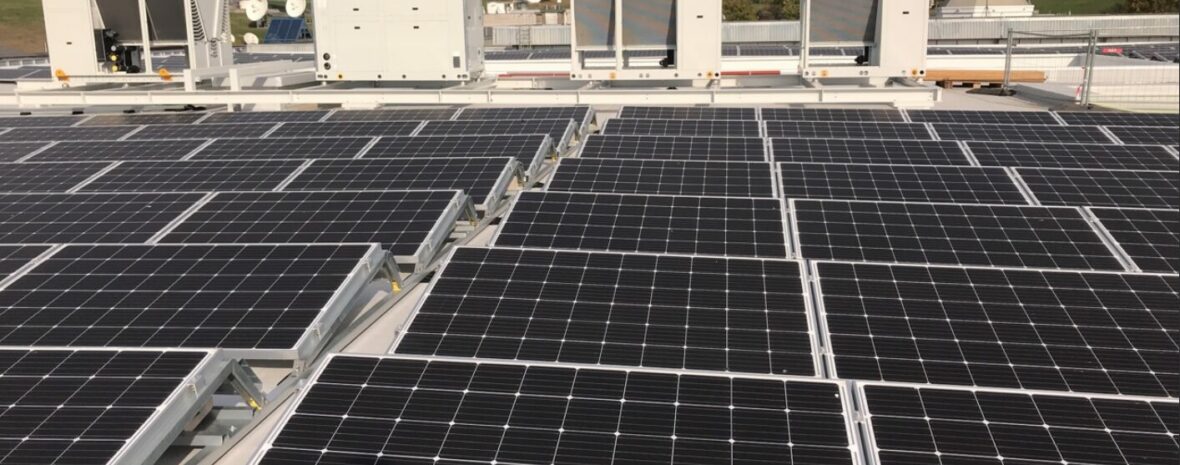
- EPB and national and regional emissions targets: growing demand for efficiency and renewable and decarbonised energy. All new buildings owned or occupied by public authorities must meet zero-emission EPB requirements and be fitted with solar energy production systems from 1 January 2027, three years before new buildings in the private sector.
Updates to the PEB regulations are currently being studied, and could see the conversion factor of electricity into primary energy lowered, which would encourage electrification.
- F-gas regulation: gradual reduction of refrigerants with high global warming potential (GWP).
- Technical standards: gas safety, new installation protocols for natural fluids.
- Changing attitudes: customers now want 100% carbon-free products, while remaining aware of budgets and reliability.
What’s more, the solutions that were seen as virtuous in the past can also be called into question as our environmental awareness develops. This is the case with Hydrofluoroolefins (HFOs), initially promoted as low-GWP eco-friendly substitutes, but now singled out as they belong to the PFAS family of “forever chemicals”, which are difficult to remove from the environment.
In the family of low-GWP gases, natural refrigerants are making a remarkable comeback in modern heat pumps.
- Propane (R290): excellent efficiency, high production temperatures (>75°C), GWP close to zero, but classified A3 (highly flammable) → major safety constraints.

Operating range of an air-to-water heat pump in domestic hot water mode according to refrigerant gas type / Flow temperature °C / Outside temperature (°C) / With R32 / With R290
CO₂ (R744): non-flammable, production temperatures above 85°C, environmentally friendly, but requires very high operating pressures (100 to 140 bar vs. 8 to 18 bar for R290).
This technology is paving the way for high-temperature heat pumps suitable for renovations, provided that design and installation are well managed.
Finding the right size – an economic and technical challenge
The size of an installation remains a crucial point.
Although NBN EN 12831 is the reference standard for calculating basic heat losses, its stationary approach does not take into account building inertia, solar and internal heat gains, or dynamic occupancy conditions, which can lead to over-sizing (some would say conservative sizing) of heating systems. Heat pumps have the unfortunate disadvantage of seeing their output reduced by 25% to 40% in extreme cold, resulting in a heat pump that’s both too powerful in mid-season and expensive to buy.
On the other hand, dynamic sizing, based on realistic operating assumptions and coupled with the designer’s experience, makes it possible to optimise the installed power and keep costs under control.
It’s a more demanding approach, but essential to striking the right balance between performance, comfort and economic viability.
The shift towards economical, smart heating
Decarbonising heating is not simply a question of swapping out the machine.
It means rethinking the relationship between the building and its energy system. Solutions do exist, but their suitability depends above all on the quality of the design, the accuracy of the sizing and the coordination between the various players.
The next few years will see the emergence of ever more intelligent and interconnected heating systems, designed to work in harmony with smart grids. The aim is no longer simply to produce heat, but to use it when renewable energy is available, via dynamic control, optimised buffer tanks, preheating strategies and making fine adjustments to demand.
At the same time, new sources of heat are being developed: recovery of waste heat — including that from data centres via “digital boilers” — low-temperature heat networks or industrial recovery on a local scale.
The development of variable-price energy markets is accelerating this transition. In Brussels, since 1 June 2025, suppliers have been authorised to offer dynamic contracts, where the price of electricity varies hourly according to the market. These tariffs pave the way for advanced control strategies: adapting plant operation in real time to reduce costs, optimise the carbon footprint and contribute to grid stability.
In addition, the development of energy communities enables local exchanges — solar electricity, shared storage, thermal synergies — improving synchronisation between production and consumption at neighbourhood level.
But beyond technology, we mustn’t give in to techno-solutionism.
In a future where available energy — even renewable energy — will remain limited, sobriety will not only be desirable: it will be unavoidable. Energy sobriety practices — illustrated in particular by the SlowHeat project (UCLouvain, ULB, Habitat & Participation, Communa) — combined with architecture with lower requirements and that maximises free inputs, remain the most direct and effective route to decarbonisation. This context ins demanding, certainly, but it’s also a tremendous opportunity to reinvent thermal comfort in a cooperative, flexible and resolutely low-carbon energy system.
Article written by: Flow Transfer International SA