Reducing the carbon footprint of buildings has become imperative. Behind this objective lie multiple levers, which are sometimes poorly defined or complex to implement. Materials, technical systems, rationalisation, sizing… decarbonisation is above all the result of a series of interdependent choices made during architectural design.


Reducing, substituting, optimising: interdependent levers
Sophie Trachte, lecturer at the Faculty of Architecture of ULiège in “Sciences & Techniques – Sustainable and Circular Design/Renovation”, highlights the importance of valuing existing buildings and prioritising refurbishment. Architectural and constructive frugality represents a second key lever, aiming to build better with fewer resources in order to reduce emissions. The role of form and floor area is decisive:
“The more a building spreads across the territory, the more materials and technical systems it requires, with a direct impact on embodied carbon, that is, the amount of CO₂ emitted throughout the life cycle of the materials, products and systems that compose it.”
The choice of materials and construction techniques is therefore essential.
Corentin Voglaire, also a lecturer at the same Faculty in “Sciences & Techniques – Technical Networks and Building Systems” and managing director of MK Engineering, a consultancy specialised in building services and environmental design, further expands the discussion by placing actual needs at the heart of the architectural project. Determining which spaces truly need to be heated, ventilated or equipped allows for better‑adapted technical responses within a highly normative context.
Material choices as an important but constrained lever
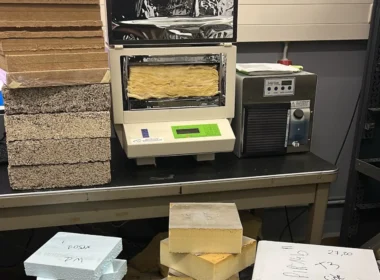
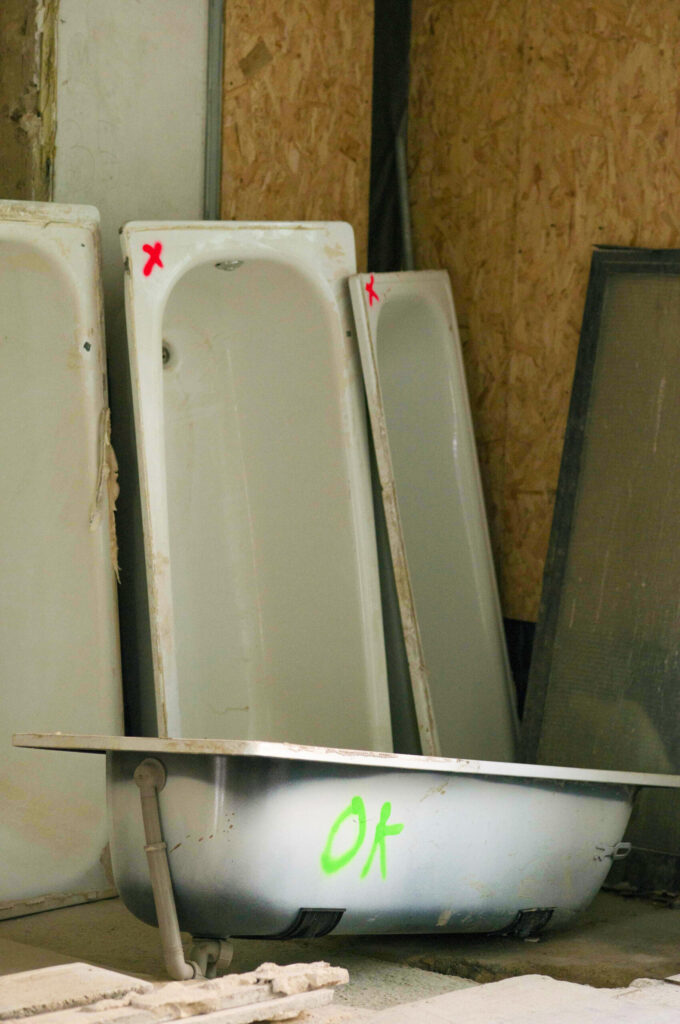
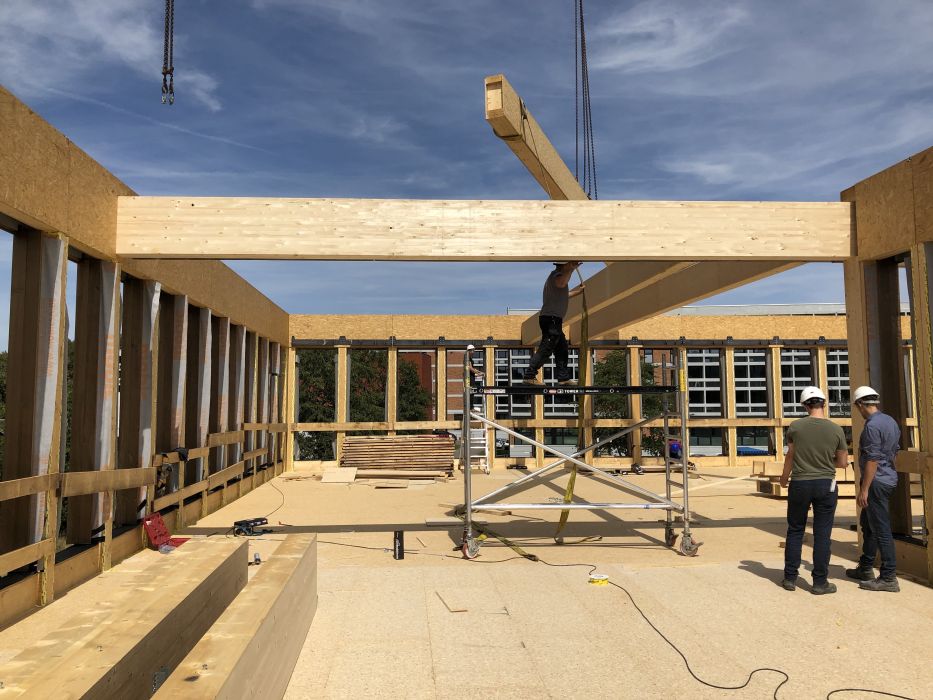
The use of low‑carbon materials, reuse and bio‑based solutions is progressing within the sector.
“Two components have a major influence on the carbon balance: the structural system and the insulation materials,”
states Sophie Trachte.
“However, practices remain heavily rooted in conventional solutions such as concrete, present throughout all project phases, from design to construction.”
Rethinking perceptions of bio‑based materials
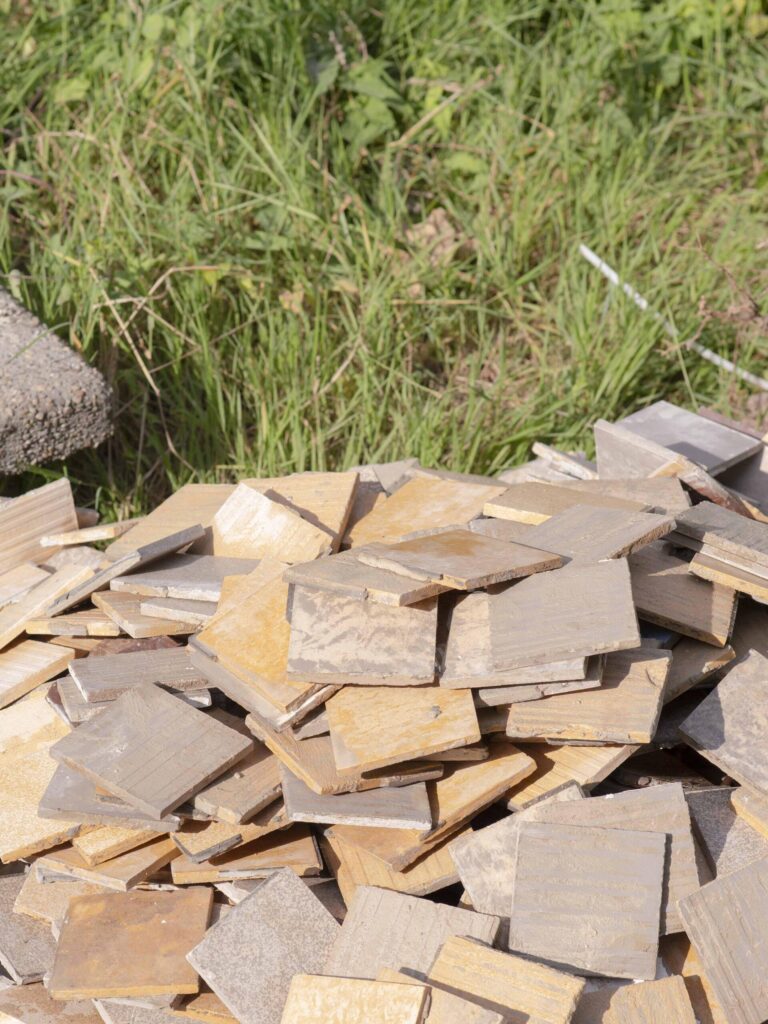
Despite the recognised importance of alternative materials such as reused or bio‑based materials, their adoption remains limited due to cultural, technical and economic barriers.
“These bio‑based materials, which allowed humanity to build its first dwellings and cities such as wood, straw or raw earth are still perceived as less reliable, less robust or less durable over time than conventional materials.”
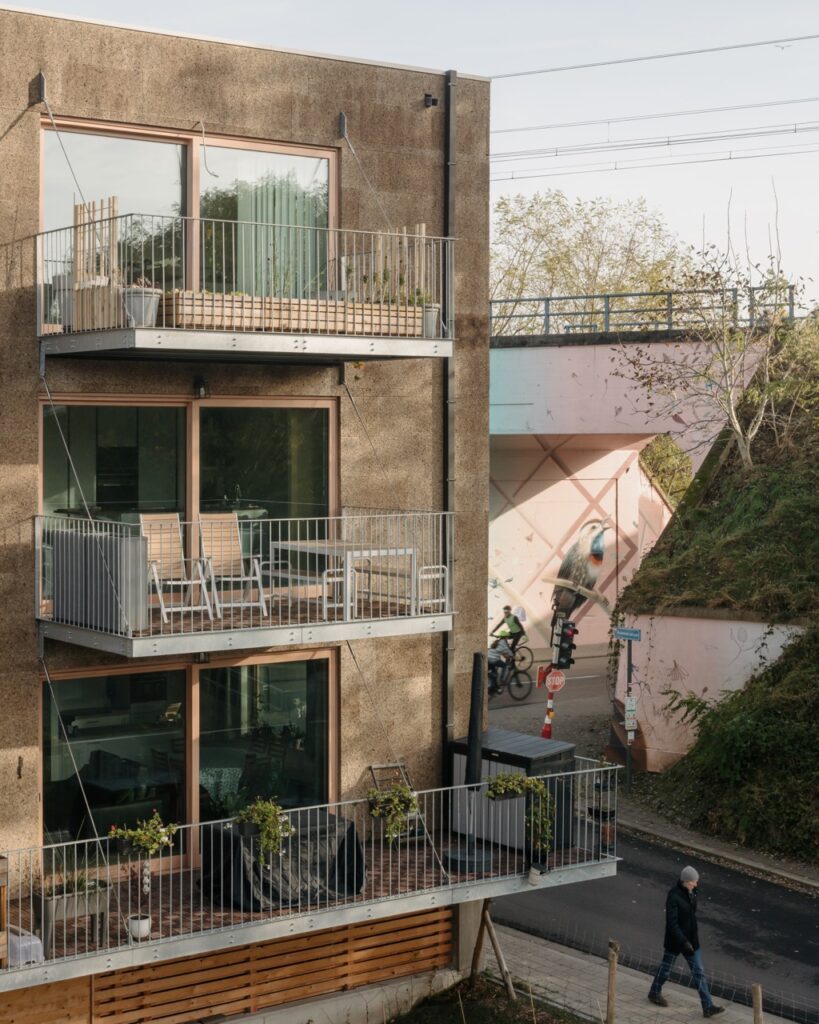
Yet these materials have reached a high level of technical and regulatory maturity, as demonstrated by the technical approvals they have obtained, and many of them are locally available in our regions.
From a technical standpoint, some materials particularly straw and earth still suffer in Belgium from a lack of normative reference frameworks (unlike in France or Germany), limiting their prescription. Bio‑based materials are also often more costly, partly due to underdeveloped supply chains and partly due to limited knowledge among architects and contractors, which impacts prices during construction. Timber, for its part, remains subject to significant price fluctuations, largely driven by export markets and the construction sector’s reliance on softwood species.
Materials and energy intrinsically linked from design
Architectural choices including form, materials and construction principles directly determine heating, ventilation and cooling needs. However, Corentin Voglaire observes a persistent mismatch:
“There have been important advances in reuse and bio‑based materials without these influencing the choice of technical systems. This results in projects that are innovative in material terms but inconsistent due to the implementation of resource‑intensive technologies.”
Energy and consumption as a decisive lever
He stresses the importance of monitoring actual energy consumption once buildings are occupied. Many buildings show gaps between projected performance and real use.
“As designers, we anticipate energy consumption, but it is rarely verified during the first years of operation. Precise monitoring allows systems to be adjusted and future projects to be improved.”
Questioning needs is crucial: should corridors be heated? Is night ventilation required? A finer differentiation of uses can reduce both energy consumption and reliance on technical systems. Ventilation exemplifies these challenges. Mechanical systems, particularly balanced ventilation, involve high airflows and significant energy use, while heat recovery becomes less effective in a warming climate (average temperatures in Brussels have risen by 2°C since 1980). Alternatives exist, such as natural or hybrid ventilation systems combining natural and mechanical approaches.
Low‑tech and frugality
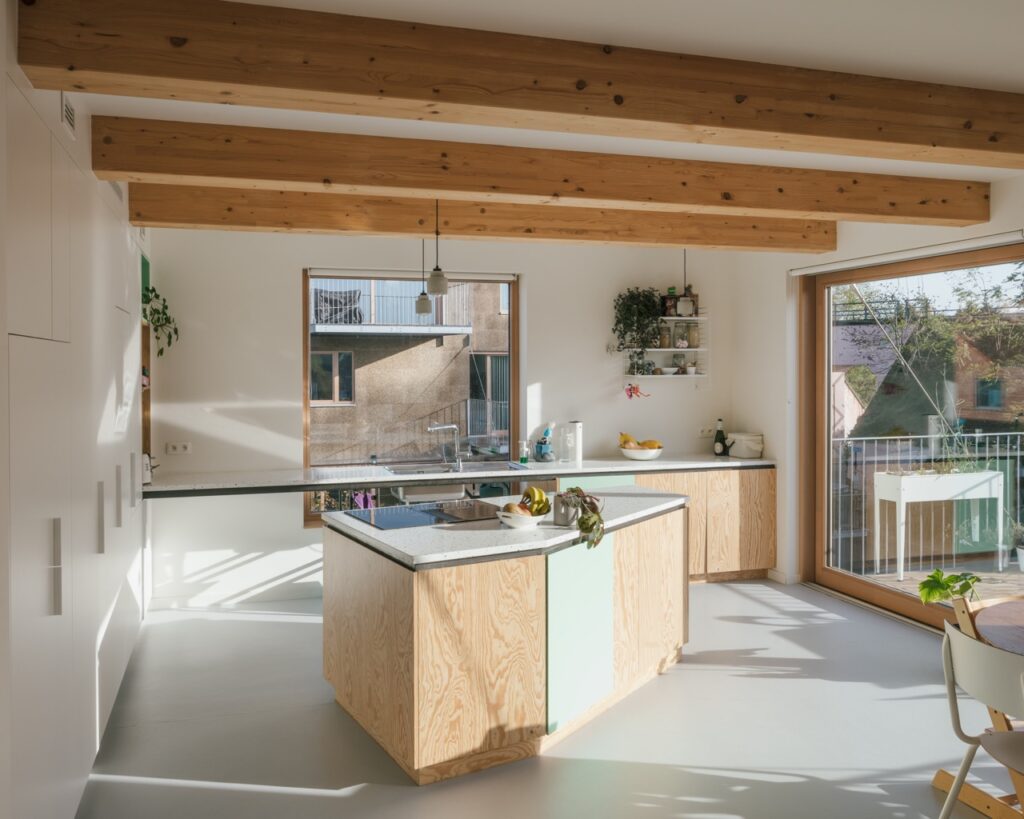
The notion of low‑tech aligns with this pursuit of sobriety but is often misunderstood. Rather than low‑tech, Sophie Trachte prefers the term frugal design, which aims to use only what is necessary, in line with available resources, in order to preserve their regenerative capacity. The goal is also to design buildings that are technically simple and easy for occupants to use.
However, this apparent simplicity requires a high level of design rigour. As Corentin Voglaire points out:
“One can claim a building is naturally ventilated and still end up with a project requiring extensive human intervention. When moving away from standardised solutions, technical design must be far more precise and closely integrated with architecture.”
Sharing to reduce
Sharing (mutualisation) is another important means of reducing the carbon footprint of buildings and even of entire neighbourhoods.
Within a single building, shared use optimises space utilisation. More continuous occupation enhances already mobilised resources, explains Sophie Trachte:
“The challenge is to maximise building use. Spaces used during the day retain residual heat that could serve other purposes at different times.”
From building to neighbourhood
At neighbourhood scale, sharing opens further possibilities:
“If we manage to share renewable energy production and rainwater harvesting at neighbourhood level even in dense urban contexts like Brussels everyone benefits. Since roofs do not all have the same orientation, this allows the site’s advantages to be leveraged while limiting its constraints.”
This goes hand in hand with a rethinking of how energy is assessed. Energy performance is still largely measured per square metre, whereas intensity of use should prevail.
“Doing more activities in less space often saves more energy than simply improving insulation. An existing building, even if imperfectly insulated, can be more efficient than several new, well‑insulated buildings. Consumption per person and per function plays a key role,”
adds Corentin Voglaire.
Beyond resources, interactions at neighbourhood scale must also be considered. The widespread deployment of certain technologies can lead to undesirable effects:
“If everyone installs a heat pump, we risk creating a neighbourhood‑scale heat effect with thermal rejection into gardens and outdoor spaces precisely the areas that currently remain most comfortable in summer.”
These challenges call for moving beyond a building‑centric approach to embrace urban logics: managing heat islands, integrating green spaces, and creating refuge areas for vulnerable populations during heatwaves. They also raise questions about coordinating urban planning, thermal and environmental regulations, which are often addressed separately.
Redefining the value of heritage through use
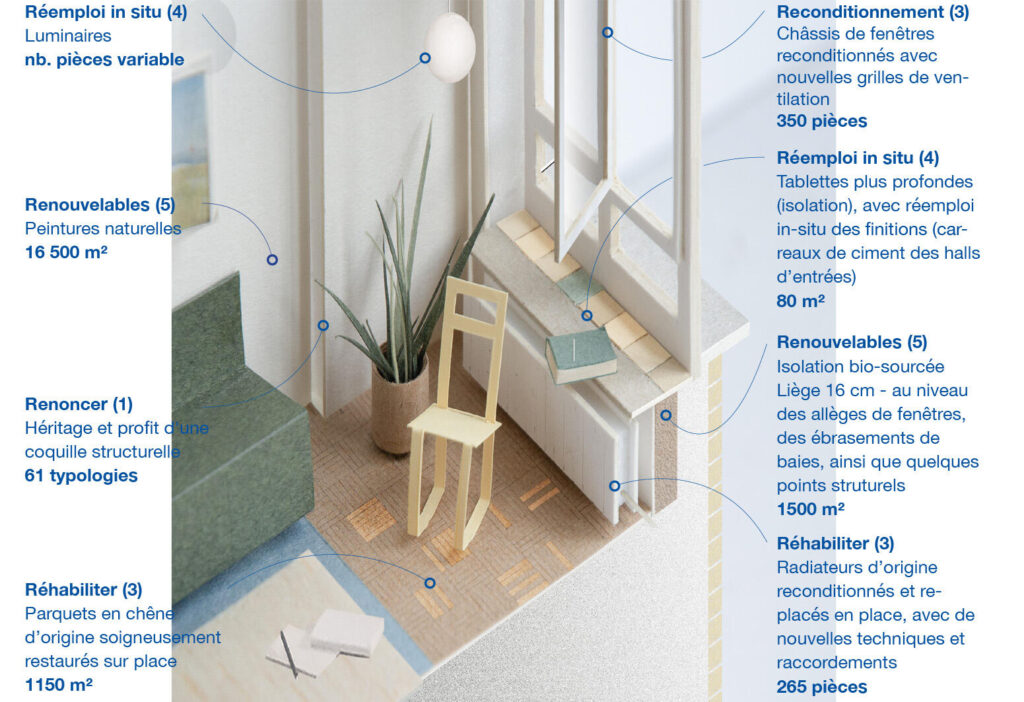
In cities such as Brussels, decarbonisation often takes place in a heritage context. However, intervening in existing buildings is not merely about preservation. Beyond historical or cultural value, a building’s ability to meet contemporary uses becomes decisive. Preserving a building without improving its habitability or functionality risks freezing an object that may ultimately fall into disuse.
Corentin Voglaire shares this observation: not all existing buildings can accommodate any function. This often leads to technical constraints and excessive use of materials and systems.
“The first question should be what we expect from the building. Some buildings deserve preservation, but this requires creativity in adapting programmes to the building.”
Rehabilitation also requires deep knowledge of original construction techniques. Understanding materials and their behaviour whether timber structures, historic concrete or specific construction systems helps avoid mistakes, particularly regarding insulation and moisture management.
Be ingenious
As Corentin Voglaire summarises, the key is to be more ingenious than purely technical:
“We need to respond precisely to needs rather than multiplying devices. A building remains a prototype: when systems become overly complex in the pursuit of performance, they often end up failing.”
Every decision architectural, technical or programmatic affects the overall project. Decarbonisation therefore calls for a more integrated design approach and strengthened collaboration, where architectural decisions, energy systems and uses are jointly considered from the earliest project stages.
Ultimately, decarbonisation invites us to broaden our scale of reflection: from building to neighbourhood, from object to use. It questions not only what we build, but also why and for whom we build.